10 Best Answer Engine Optimization Tools (AEO) in 2026

You already know AI answers are where a growing share of buyers first meet your brand. The harder part is seeing whether your brand and content show up in those answers from ChatGPT, Perplexity, or AI Overviews, and which tool shows you that clearly enough to act on.
This guide compares 10 professional AEO tracking tools on what they measure, what they cost, and who each one fits.
What is answer engine optimization (AEO)?
Answer engine optimization (AEO) is a strategy to make content the primary source for AI responses. Done well, it increases the likelihood that your content becomes the direct answer when users ask specific questions. AEO tools provide insights that help you organize and structure content so these systems can extract and cite it easily.
AEO usually gets discussed alongside two neighboring strategies. People treat them as separate, though the lines are blurrier than they look:
- Traditional SEO prioritizes website clicks and links.
- AEO focuses on providing direct answers in AI chats and targets short questions.
- GEO works better for detailed topics in AI texts.
We cover the GEO side of this split separately in our GEO tools roundup.
AEO also includes voice assistants and smart speakers. This provides visibility across conversational results.
Google’s own John Mueller has said there’s nothing special required for AI-generated responses beyond normal SEO. The vocabulary is still unsettled in practice, too: a recent survey of 343 marketing decision-makers found 81% still describe this work as SEO, and only 27% have adopted terms like GEO or AEO.
The label matters less than the outcome the tools below measure: whether AI answers cite you at all.
What makes a great AEO tool in 2026?
In 2026, a good AEO tracking tool should focus on how AI models process and present your brand. Answer engine optimization tools should have these features:
- Comprehensive answer tracking. It monitors mentions, citations across AI models.
- Prompt-level analytics. It analyzes and groups questions by topic.
- Competitor intelligence. It identifies rivals in AI responses and tracks their share of voice.
- Source detection. It tracks whether AI models link back to your site.
- Advanced signal monitoring. It tracks the AI’s answer consistency.
- Content optimization. It recommends making your data a primary answer.
- Reporting and exporting. It generates documents, datasets.
- Technical connections. It offers API access and connects with tools for custom exports.
Here’s what separates the best AEO tools from the rest once you put them side by side:
| Tool | AI platforms tracked | Best for | Core strength | Starting price |
|---|---|---|---|---|
| SE Visible | AIOs, AI Mode, Gemini, ChatGPT, Perplexity | CMOs, marketing leaders, brand specialists, agencies, business owners | Strategic insight into brand AI visibility across answer engines with competitor insights, sources, and sentiment score. | $99/month |
| Writesonic | ChatGPT, Google AI Mode, AI Overviews, Gemini, Perplexity, Claude | Enterprises and marketing agencies; brands focused on improving AI search visibility and citations | Actionable GEO workflows combining AI visibility tracking + citation analysis + in-platform content optimization | $99/month |
| Surfer AI Tracker | ChatGPT, Perplexity, Gemini, and other AI platforms | Marketing teams, agencies, and content-driven brands that manage both SEO and AI visibility | Combines AEO tracking with content optimization workflow + fan-out query data + Content Score | $95/month |
| Nightwatch | ChatGPT, Google AI Overviews, Microsoft Copilot, Perplexity, Claude | Agencies, local SEO, multi-client teams | Combines classic SEO + AI visibility + zip-code tracking | €99/month |
| Goodie AI | ChatGPT, Claude, Perplexity, Google AI Overviews, AI Mode, Microsoft Copilot | Growth teams, marketing leaders | Actionable AI visibility + sentiment + optimization actions | $478.80/month |
| Otterly AI | ChatGPT, Claude, Perplexity, Google AI Overviews, AI Mode, MS Copilot | Agencies, brand monitoring | Daily prompt tracking + brand perception + reports | $29/month |
| Profound AI | ChatGPT, Claude, Perplexity, Google AI Overviews, AI Mode, Gemini, MS Copilot | Enterprises, high-profile brands | Enterprise-grade analytics + AI content automation | $99/month |
| Peec AI | ChatGPT, Claude, Perplexity, Google AI Overviews, AI Mode, Gemini, MS Copilot | Marketing teams, fast insights | Multi-engine tracking + content gap detection | $95/month |
| AEO Vision | ChatGPT, Claude, Perplexity, Gemini, Google AI Mode, and Google AI Overviews | Agencies, creators, ecosystems | Real-time sentiment + AI visibility score | $9/month |
| Rankscale AI | ChatGPT, Claude, Perplexity, Gemini, MS Copilot | CMOs, agency owners | Deep citation + sentiment + AI site audits | €20/mo |
Top answer engine optimization tools
I’ve put together a list of the most popular answer engine optimization tools that are leading the market in 2026:
SE Visible
SE Visible by SE Ranking is AEO analysis software designed to help brands understand how they appear, compete, and are described in AI-generated answers. It focuses on visibility and perception across major answer engines, including ChatGPT, Perplexity, Gemini, AI Overviews, and AI Mode, using real AI responses rather than simulations.
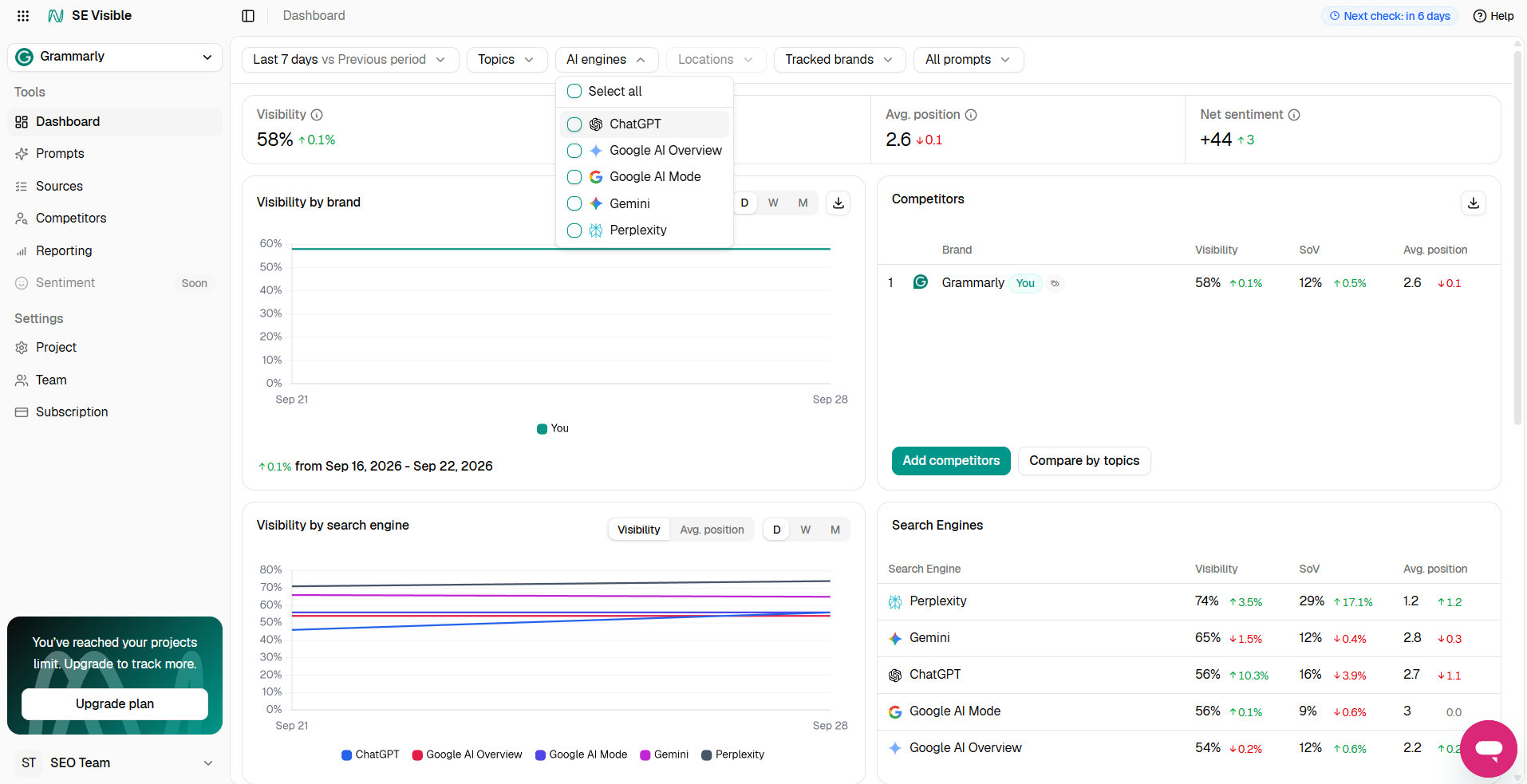
SE Visible provides a strategic view of brand presence in AI search, not raw data. I noticed several features that I think will help marketing teams get a better understanding of where their brands stand from different angles:
- AI Visibility Score shows how often your brand appears in AI answers and how prominently it is mentioned.
- Competitor benchmarking lets you compare your visibility and sentiment against other brands appearing in the same topic or niche.
- Prompt and topic analysis reveal which questions users ask in your area of interest and which trigger AI mentions of your brand.
- Source insights identify the domains and URLs AI engines rely on when forming answers.
- Sentiment Tracking highlights whether AI presents your brand positively, negatively, or neutrally, with a score from -100 to +100.
At setup, SE Visible suggests your direct competitors, prompts, and topics, so you start with a ready-to-use view rather than a blank dashboard. Metrics then refresh daily, so shifts in how AI describes your brand show up as they happen rather than weeks later.
SE Visible is built by the SE Ranking team and draws on SE Ranking’s years of experience in search, with broad source coverage behind the answers it captures. It stays focused on one job, AI visibility, while SE Ranking covers the traditional search side: rank tracking, keyword research, competitive research, and technical SEO. The two answer different halves of the same question, so running them together gives you a fuller view of how your brand performs across both search and AI, not just one surface.
Pros & Cons
Strengths of SE Visible:
- Built specifically for AI and answer engine visibility tracking.
- Clean dashboards with clear visualization and minimal setup time.
- Multi-platform AI coverage in one place (ChatGPT, AIOs, AI Mode, Perplexity, Gemini) on every plan.
- Real AI response data, not API shortcuts or simulations.
- Supports multiple languages and countries.
- Unlimited user invites and multi-client projects, useful for agencies running several brands at once.
- Backed by SE Ranking’s long-standing data quality standards.
Limitations of SE Visible:
- Data exports are currently limited to CSV.
- Per-seat permission controls are still on the roadmap.
Pricing
SE Visible plans start at $99/month (Basic) for 200 prompts and 3 projects. Core is $189/month for 450 prompts and 5 projects. Plus is $355/month for 1,000 prompts and 10 projects. A Custom plan is available for larger needs. A 10-day free trial is available.
Best for
SE Visible fits agencies running AI visibility for their clients, from SEO and GEO leads to strategy and account directors who own the monthly client readout and want visibility data they can put in a pitch. It’s an equally strong fit for in-house marketing, brand, and PR leaders, CMOs, heads of brand, and communications directors, who need to see how AI describes their brand and how they compare to competitors, without technical complexity.
Writesonic
Writesonic is a leading Generative Engine Optimization (GEO) platform that helps brands move beyond traditional SEO into conversational AI visibility. It functions as a powerful AI visibility and optimization software, tracking how your brand appears across ChatGPT, Gemini, Perplexity, Claude, and Google AI Mode while also helping you improve those mentions through guided workflows.

Writesonic provides advanced features to monitor and improve your presence in AI answers:
- Prompt-Level Tracking tracks which queries trigger brand mentions across AI engines.
- AI Visibility Insights measure how often your brand appears and where competitors outperform you.
- Missed Answer Detection highlights where your pages are not cited and how many AI answers you’ve missed.
- Citation & Source Tracking identifies the exact URLs AI systems reference.
- Action Center Workflows provide step-by-step recommendations to fix gaps, update content, resolve technical issues, and increase citations.
Pros & Cons
Strengths of Writesonic:
- Combines AI visibility tracking with actionable optimization workflows
- Identifies missed citations and visibility gaps
- Tracks prompts, sources, sentiment, and competitors in one place
- Strong multi-engine coverage
Weaknesses of Writesonic:
- Advanced capabilities may feel overwhelming for smaller teams
- Higher-tier plans unlock deeper analytics and workflows
- Less focused on traditional SEO metrics like backlink tracking
Pricing
- Starter Plan: $99/month
- Basic Plan: $249/month
- Growth Plan: $499/month
- Custom Enterprise pricing available
Best for
Writesonic is best for Enterprise and marketing agencies actively investing in Generative Engine Optimization. It’s especially valuable for brands that want clear execution steps alongside tracking to increase citations and improve AI visibility across multiple platforms.
Surfer AI Tracker
Surfer AI Tracker is an answer engine optimization and SEO platform that integrates AI visibility into a full content optimization workflow. Rather than offering AI monitoring as a standalone product, Surfer’s AI Tracker works alongside its existing suite of keyword research, content editing, and SEO tools, making it one of the few platforms where you can identify a visibility gap and publish optimized content without switching between products.

Surfer’s AI Tracker key features for AEO include:
- AI Visibility Tracking monitors citations, brand position, and mention frequency across ChatGPT, Perplexity, Gemini, and other AI platforms.
- Sources Dashboard shows which domains LLMs cite most and surfaces mention gaps, pages that cite competitors but not your brand.
- Competitor Benchmarking compares visibility against rivals across tracked prompts.
- AI visibility optimization suggestions help you optimize pages for both traditional SEO and AI citation patterns, using Surfer’s Content Score and recommended content.
- Fan-Out Query Analysis reveals the subqueries AI models run internally when generating responses, helping identify content opportunities.
Pros and Cons
Strengths of Surfer AI Tracker:
- Combines AEO tracking with a proven content optimization workflow in one tool.
- Fan-out query data provides unique insight into how AI models research answers.
- Content Score optimizes simultaneously for traditional rankings and AI citations.
- Direct CMS integration closes the gap between insight and execution.
Limitations of Surfer AI Tracker:
- AI tracking is part of a broader visibility platform, which may feel heavy for teams that only need standalone AEO monitoring.
- Prompt volume data for AI queries is not currently available.
- Does not track technical SEO/AEO.
Pricing
- AI Search Analytics starts at $95/month and tracks 50 AI prompts daily.
- The Standard plan costs $119/month and includes prompt tracking across ChatGPT only.
- The Pro plan costs $219/month. It lets you monitor prompts across 5 AI platforms, identify mention gaps and brand sentiment, create up to 30 documents, and audit existing articles.
- The Peace of Mind plan is $359/month with unlimited document creation and full API access.
Best for
Surfer is best for marketing teams, agencies, and content-driven brands that manage both SEO and AI visibility and want a single platform covering tracking, optimization, and publishing.
Nightwatch
Nightwatch is the best AEO tool that connects traditional SEO with conversational visibility. It functions as a powerful AEO tracking software, pulling data from various sources to provide accurate metrics on how your brand appears in AI responses.

Nightwatch provides features to monitor your presence in AI-answers:
- Generative Rankings tracks your specific positions across AI models.
- AI Visibility Score measures your brand presence within generated responses.
- Citation Intelligence identifies URLs and links that AI models use when they mention your business.
- Precise Localization monitors performance across global locations with zip-code accuracy.
- Search Simulator shows unbiased views of search results as they appear to users.
These features live in one dashboard that updates quickly. As for me, this is important since it guarantees you follow all shifts in AI search. This best AEO tracker will help you maintain your brand authority.
Pros & Cons
Strengths of Nightwatch:
- It combines traditional keyword tracking with AI monitoring.
- The tool offers very precise location tracking down to the zip code.
- Most plans have unlimited user seats and white-labeling reports.
As Wayne B., an agency owner, shared on G2: “They have so many features and their software is so powerful that I cannot cover all of it here.”
Weaknesses of Nightwatch:
- Low AI tracking limits on the cheaper plans.
- Detailed data charts may take time to learn.
- There are no built-in tools for checking backlink profiles or finding link-building opportunities.
Pricing
Monthly plans run from €99/month (Starter, 500 keywords, 50 AI prompts) to €499/month (Agency, 7,500 keywords, 500 AI prompts). For larger needs, Enterprise pricing is custom.
AI-answer tracking is included in every plan, not sold separately.
You can test the best AEO software features with a 14-day free trial. Annual billing offers a 20% discount.
Best for
Nightwatch is the best AEO tracking tool for marketing agencies that manage multiple client portfolios. After testing it, I found the tool ideal for local businesses and data-focused teams that prioritize geographic precision in their reports.
Goodie AI
Goodie AI is the best AEO tool that helps brands stay visible in AI-powered search models. This cloud-based platform monitors how LLMs represent your business, helping you reach customers in the AI search industry.

To optimize mentions across conversational platforms, Goodie AI has several features:
- AI Visibility Monitoring tracks your brand presence across AI platforms.
- The Performance Dashboard displays your and competitors’ rankings.
- An AI Optimization Actions gives you advice on semantic content and schema tags.
- Prompt Research finds the high-volume, high-intent prompts customers use in AI search.
- Sentiment Analysis monitors whether AI responses about your business are positive or negative.
- Analytics and Attribution measures how AI mentions impact the brand.
This AEO analysis tool range helps you move from basic data to clear steps for growth.
Pros & Cons
There are not many Goodie reviews across the web, so I relied only on my experience describing its pros and cons.
Benefits of using Goodie AI:
- It offers broad coverage across different AI engines.
- Goodie offers clear steps to fix visibility gaps rather than just showing charts.
- Brands can track their performance across different countries and languages.
By tracking performance with Goodie AI, Rathbones, a UK wealth management firm, identified where to focus efforts and which platforms offered the biggest upside. This resulted in 2.3x growth in AI visibility.
Drawbacks of using Goodie AI:
- It lacks backlink analysis, and its site audit focuses on AI crawlers rather than traditional technical SEO.
- Goodie has a few connections with other marketing software.
- New users might need time to understand the unique AI metrics.
Pricing
The Core plan is $478.80/month and the Pro plan is $1,198.80/month when billed monthly, while the Enterprise plan requires custom pricing. Core includes 5 seats, and this AEO software provides unlimited seats on both the Pro and Enterprise plans.
Best for
Goodie AI platform is the best tool for AEO for growth teams and marketing leaders who need to track their reputation.
Otterly AI
Otterly AI provides a dashboard to monitor brand mentions across several generative engines. This best AEO checking tool that automates the process of checking how your content appears in AI-generated answers.
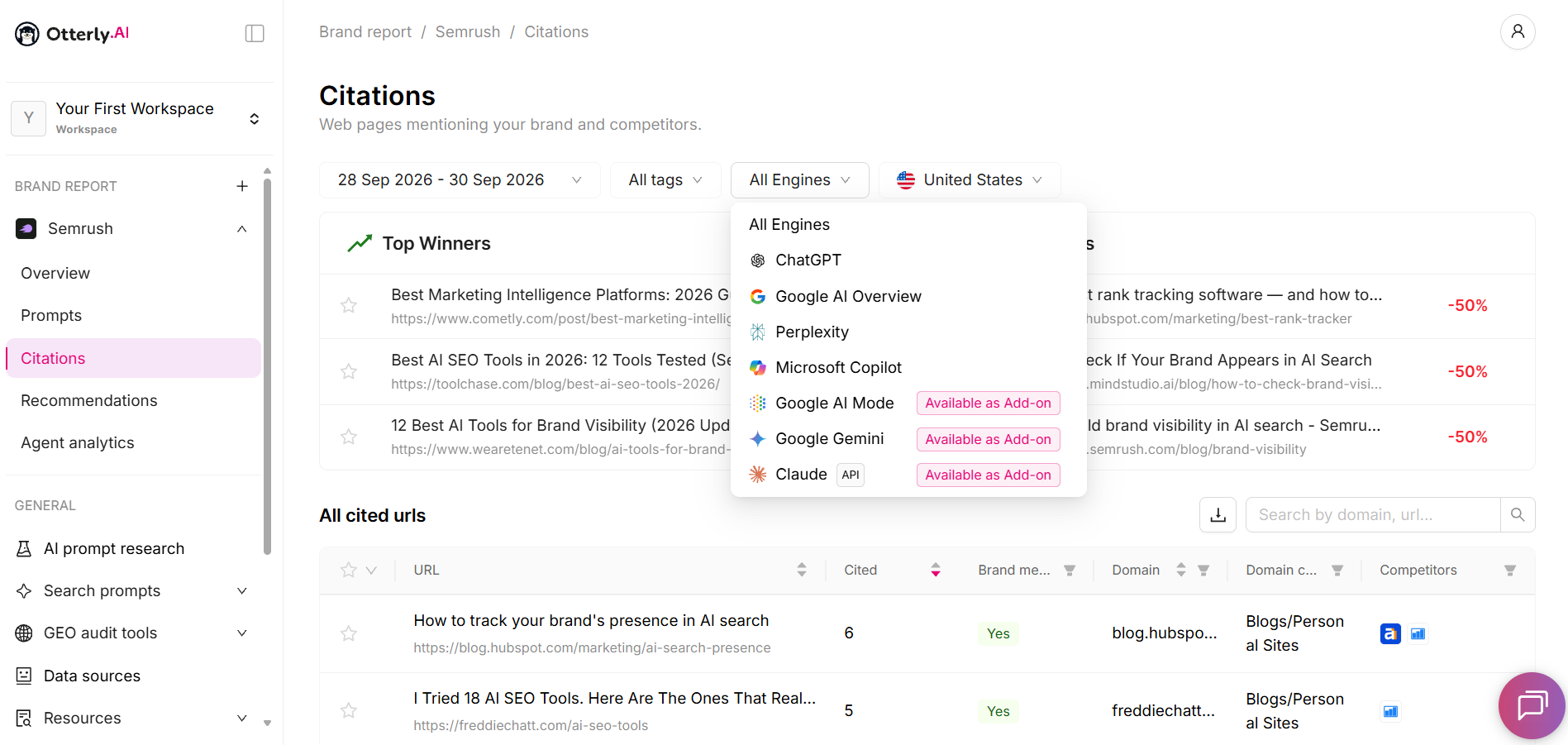
When I tested it, I liked the features of this AEO checking tool that help you maintain brand authority as search results change:
- AI Prompt Research identifies the questions users ask AI assistants.
- AI Search Analytics checks queries across engines.
- Brand Reports track key metrics like brand coverage and average position.
- The Brand Visibility Index measures how often your business is mentioned in AI answers.
- Domain Ranking and Analytics monitor cited links to show your position in the generated answers.
- Link Citations Analysis reveals which pages are referenced most by AI models.
- Website Citations Gap Analysis identifies where your rivals are cited but you aren’t.
- Detailed Reports and Exports allow you to share all the data.
These features, often found in professional AEO tools, help you adapt quickly to changes in AI search behavior.
Pros & Cons
The strengths:
- Automated daily monitoring of search prompts.
- Specific tracking for brand sentiment and perception.
- Connects with Google Data Studio for custom reporting.
- Workspaces allow for easy multi-client management.
One G2 reviewer in marketing and advertising described the tool’s biggest strength as how it simplifies client conversations: account teams can pull a visibility report mid-call and show real proof of their AI search presence, with no extra prep. (G2 review)
What are the cons of using Otterly AI?
- Lower pricing tiers limit the number of search prompts.
- Some AI engines come as add-ons.
- The name is often confused with the meeting‑note app Otter.ai.
Pricing
Lite costs $29 per month, Standard is $189, and Premium is $489. Annual billing offers a 15% discount. You can test this best AEO software with a free trial.
Best for
Otterly AI is the best AEO checking software for marketing agencies managing multiple client brands. These teams usually need to monitor reputation and report on visibility across different AI platforms.
Profound
Profound AI is one of the best AEO analysis tools that is built for brands navigating the shift to AI-driven search results. This platform helps marketing teams analyze and control their brand narrative across multiple AIs.
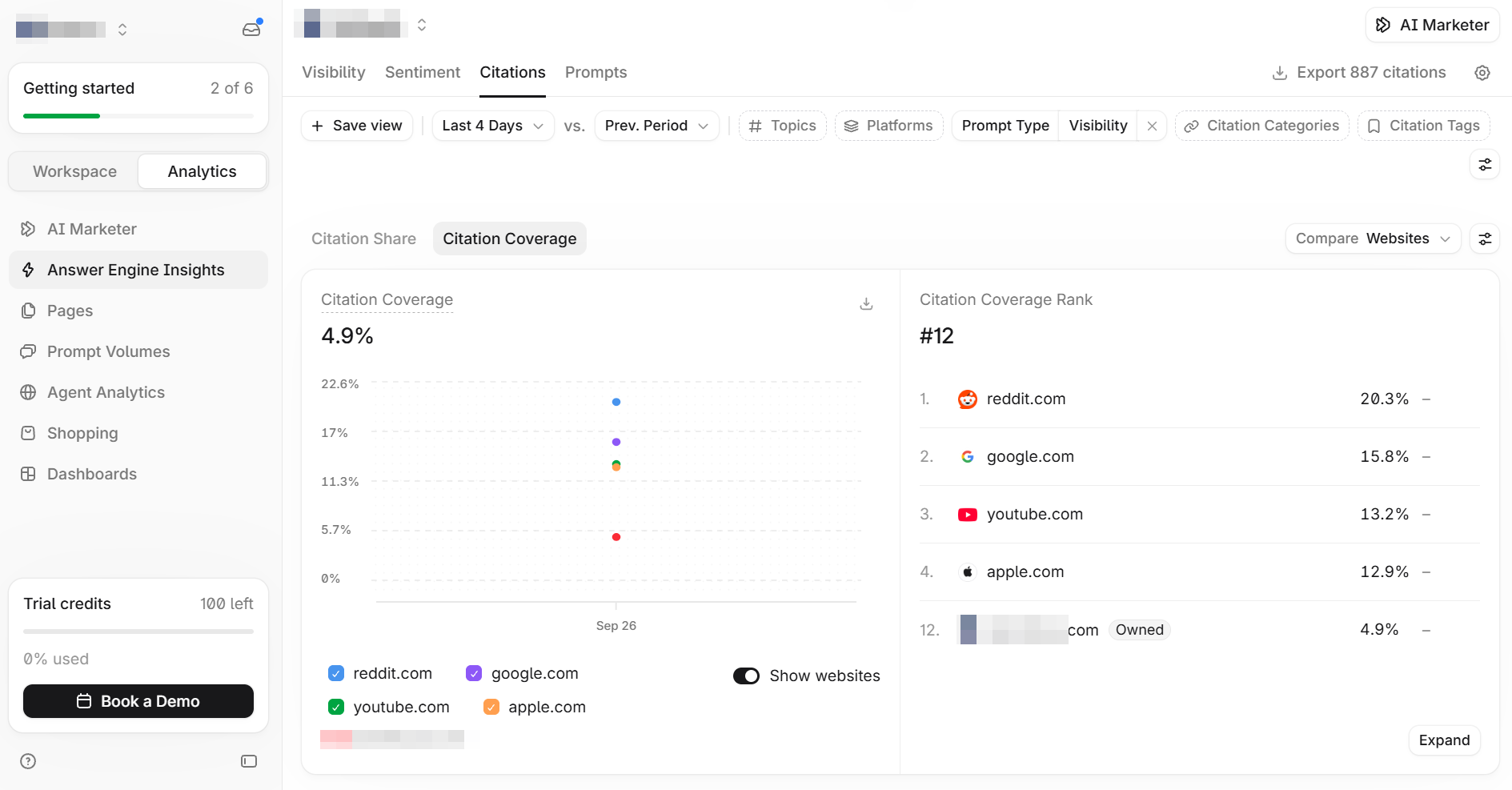
Profound AI has several features that the best AEO checking tools lack to improve digital narrative:
- The Visibility Dashboard helps you track scores and compare your brand against competitors.
- Prompt Volumes estimates AI search volume and shows how rivals get cited.
- You can monitor visibility across various AI models with Multi-Platform Coverage.
- The Prompt Designer manages custom queries and generates new ones to track.
- Systems stay protected through SOC 2 compliance and integrations with AWS/Cloudflare.
I strongly believe that Profound’s features make it a powerful tool for AEO when managing corporate data. Professional teams rely on these insights to secure their spot in AI-generated answers.
Pros & Cons
The strengths of Profound AI:
- Generates optimized content using real visibility data.
- Reveals conversational industry volumes often hidden in other tools.
- Automates the creation of AI-optimized articles.
Natalie, Head of Growth in a small business, shared on G2, “Before Profound, we had no idea if the AEO efforts we were making had any impact on our results in LLMs. Now we can actually see how new content or updates to our content not only impact our visibility but also our citation count.”
The weaknesses of Profound AI:
- Most advanced features and multi-platform tracking are behind custom enterprise plans.
- Heavy data interface requires analyst expertise.
- Lacks traditional site audit tools.
Pricing
The Trial plan is free and tracks 50 prompts daily for 7 days, while Enterprise pricing is custom. This AEO software offers unlimited seats on both plans. Enterprise adds daily tracking on up to 9 answer engines.
Best for
Profound is one of the best AEO tracking tools for marketing leaders at large-scale organizations and agencies managing high-profile clients. It works best for teams where AI recommendations directly influence revenue.
Peec AI
Peec AI is an AEO analysis software that helps marketing teams track and analyze brand performance in responses from different engines.
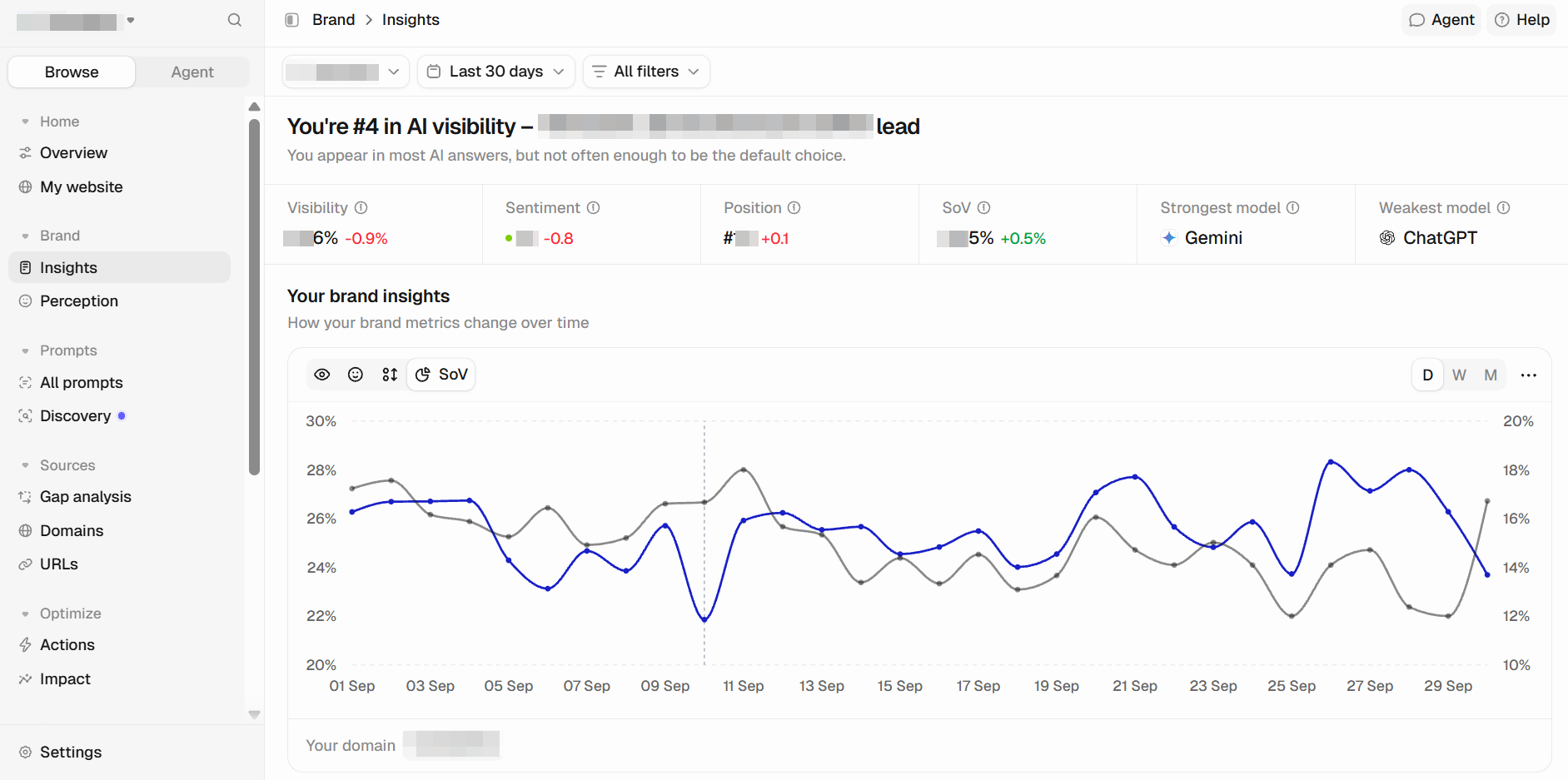
Peec AI provides several tools to help marketing teams understand their reach in conversational search. This best AEO analysis tool has several features:
- Prompt Management finds and organizes the queries most relevant to your AI search strategy.
- Brand Ranking monitors your position against key competitors in AI answers.
- AI Model Selection tracks visibility across the chosen platforms.
- Source Identification spots citations and URLs that influence your search results.
- Actionable Recommendations provides strategy insights to help you capture high-impact opportunities.
Peec also provides a public API and native MCP on almost all paid plans, and SSO on the Enterprise plan.
These features make it one of the leading AEO analysis tools for brand authority monitoring.
Pros & Cons
The advantages:
- Fast data analysis with results that are easy to understand.
- Identifies content gaps by showing which sources competitors use for visibility.
- Daily tracking updates allow teams to spot shifts in AI visibility quickly.
Grégoire, Head of Growth, shared on G2, “The pricing is fair and includes the main LLMs from the start. They use clickstream data to help you determine how popular a specific query is.”
The disadvantages:
- No built-in content generation. Actions surfaces prioritized recommendations, but drafting happens in a separate tool.
- Does not track the actual traffic volume coming from LLMs to your site.
- Users can only choose 3 engines out of 6 to track in self-serve plans.
Pricing
The Starter plan is $95 per month. The Pro plan costs $245 per month. The Advanced plan costs $495 per month. Also, there is an option to get a custom Enterprise plan. Annual billing provides a 15% discount. To help you explore the features of one of the best AEO trackers, Peec AI provides a 7-day free trial.
Best for
If you are searching for the best answer engine optimization tools, Peec AI is for you. It is ideal for marketing teams that need reliable multi-engine tracking with minimal setup and brands who can take data and turn it into a content strategy.
AEO Vision
AEO Vision is the best AEO analysis software designed to help brands see and shape their visibility in AI models. It provides advanced tools to track where your business stands in conversational results and monitor real-time brand perception across leading platforms.
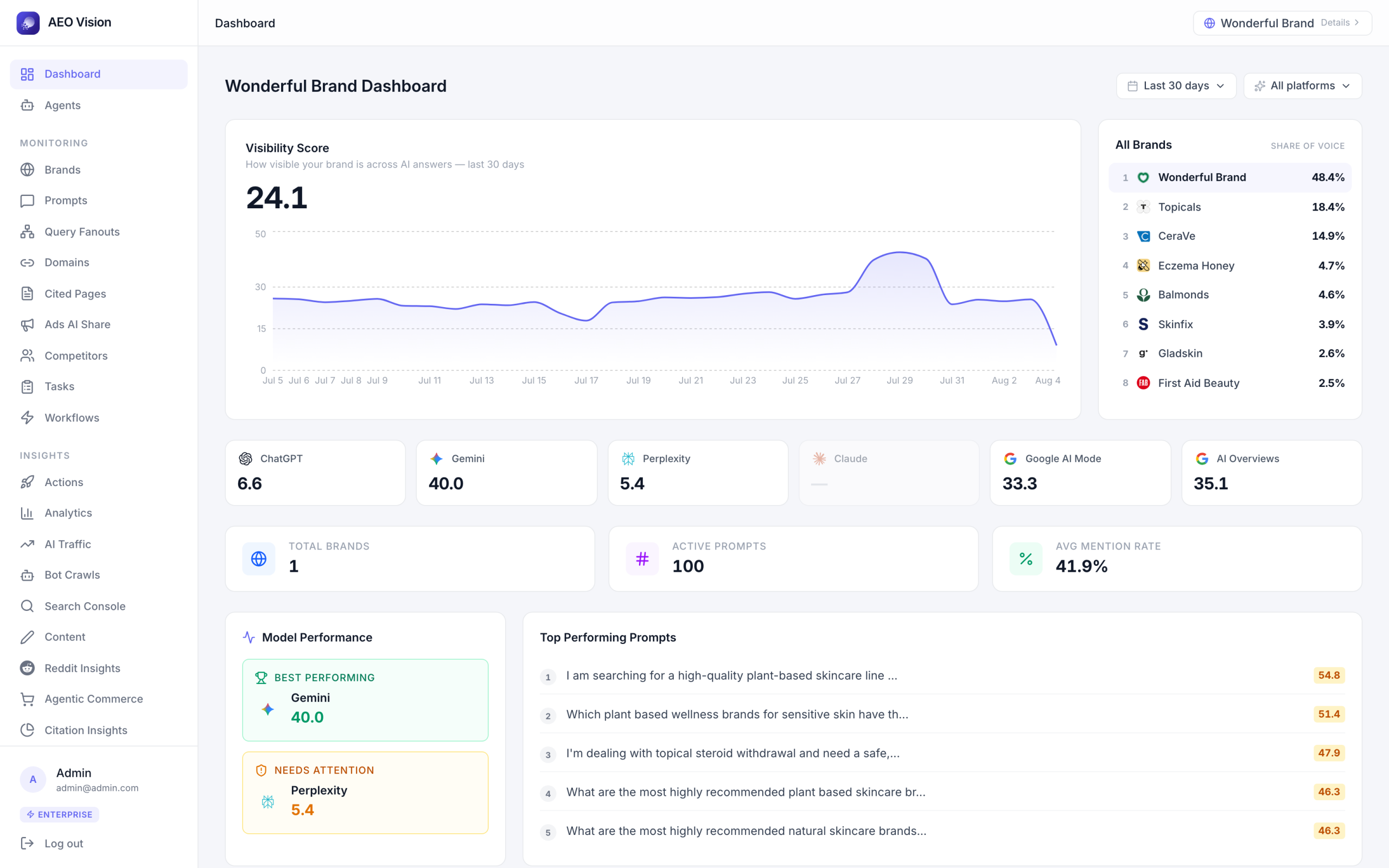
Like other answer engine optimization tools, AEO Vision offers a few specific features:
- Broad AI Engine Coverage tracks your brand across AI platforms.
- AI Visibility Score shows your overall presence and impact in the AI search.
- AI Prompt Tracking monitors how AI platforms mention and cite your brand.
- Automated Competitor Discovery identifies rivals.
- Daily Sentiment Tracking analyzes whether responses are positive, negative, or neutral.
- Competitor Intelligence compares your mention share, cited domains, and sentiment with rivals.
Through these features, AEO Vision becomes the best AEO checker for monitoring your digital footprint across multiple generative engines.
Pros & Cons
At the time of writing, the tool has few user reviews, basically because it’s relatively new. Below are my observations and thoughts.
The advantages:
- Offers sentiment trends.
- Features a unique Visibility Score for easy at-a-glance performance tracking.
The disadvantages
- The platform may require time to master for new users.
- Very limited entry plan: The $9 Lite plan tracks only ChatGPT, with 30 prompts checked every 3 days.
Pricing
The Lite plan costs $9 per month, Solo costs $99, and Growth costs $299. Agencies can choose Agency Starter ($499/month) or Agency Pro ($999/month), with custom Enterprise and Agency Scale plans for larger needs. All plans come with a 20% discount if billed annually.
Best for
AEO Vision is one of the best answer optimization tools for AI visibility for marketing agencies and multi-brand operators who need to manage an entire ecosystem from one hub. It also suits solo creators who want to stay ahead in the AI visibility race without complex manual work.
Rankscale AI
The next one of the best tools for AEO is Rankscale that is designed to analyze and optimize your brand’s presence in conversational search.
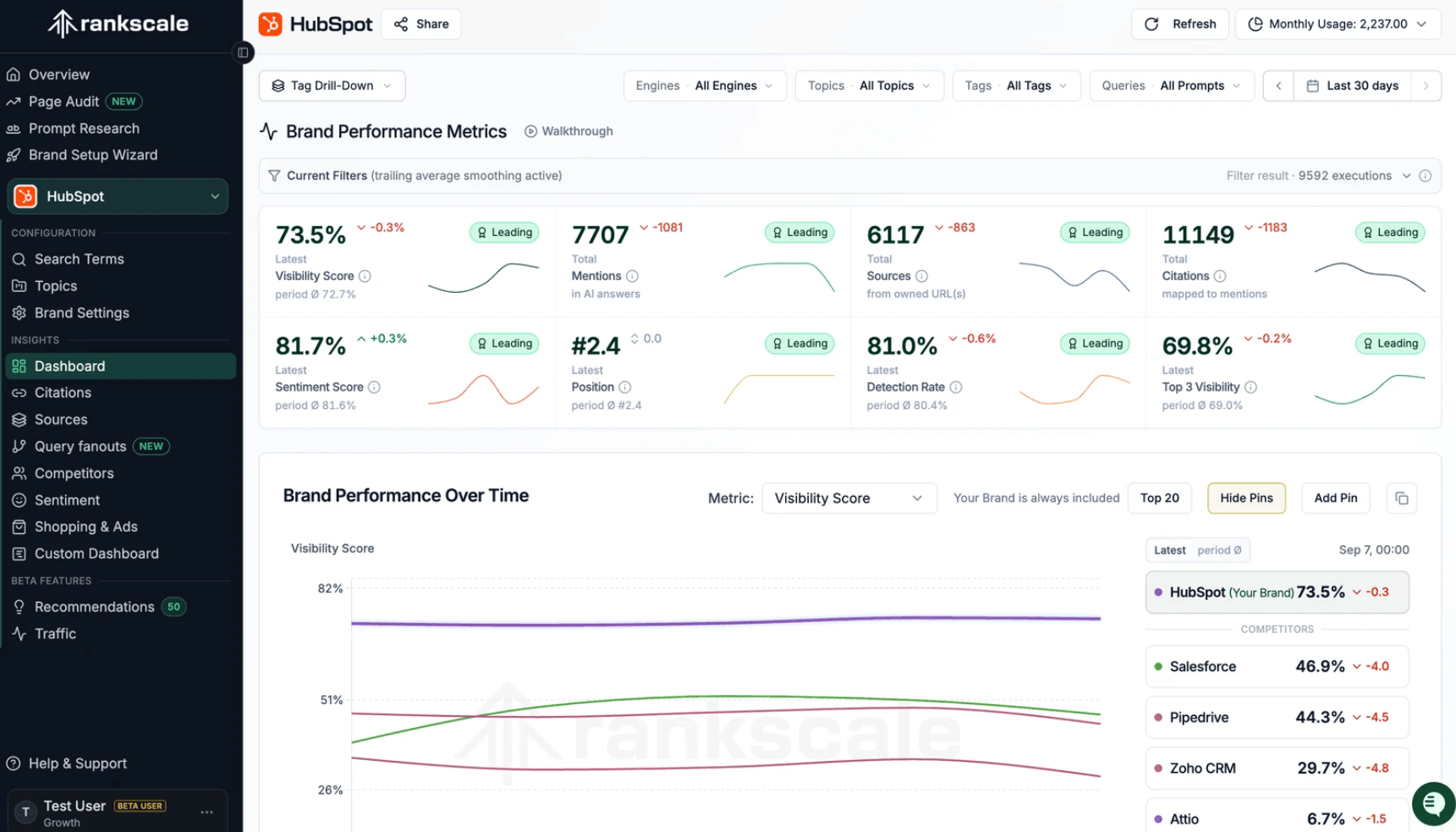
Answer engine optimization tools like Rankscale help marketers move beyond traditional link tracking. It focuses on how generative models cite and perceive their brands. I checked out some features of AEO trackers that Rankscale also has:
- The Brand Dashboard groups performance metrics, competitor insights, and citation data in one place.
- AI Rank Tracker monitors your position and visibility scores across AI engines.
- Competitor Benchmarking identifies and compares rivals in AI results.
- Citation Analysis reveals which specific domains and articles drive the AI answers.
- Sentiment Analysis visualizes positive and negative keywords to show how models perceive your reputation.
- Page Audits scan your site structure to provide an AI Readiness Score and optimization tips.
These features guarantee the platform remains one of the best AEO checkers that makes it easy to identify actionable improvements for your website.
Pros & Cons
Benefits of using Rankscale.AI:
- Maps the specific third-party websites that influence your AI citations.
- Tracks brand sentiment and identifies brand identity mapping.
- Provides full-fidelity snapshots of AI answers for credible reporting.
A verified G2 reviewer in marketing and advertising called the interface a little overwhelming at first, but pointed to Rankscale’s active work on the UX/UI as making it good value for the price right now. (G2 review)
Drawbacks:
- It requires manual effort to implement the suggested content changes.
- The high volume of technical data can create a steep learning curve.
- Frequent AI model updates can cause visibility scores to change.
Pricing
Essential costs $20/month, Pro is $99/month, Growth is $385/month and Enterprise is $780/month. You can also save 15% on these rates by switching to annual billing.
Best for
Rankscale is the best answer engine optimization services choice for CMOs and agency owners who need to manage multiple brands from one place.
Future of AEO: what to expect in 2027?
By 2027, search will look different. AI answers increasingly sit at the top of the page, and users often get what they need from a prompt before they click. This doesn’t push traditional search out of the picture; it adds another surface where your brand has to show up.
We already see these changes. ChatGPT now has more than 900 million weekly active users, OpenAI’s own numbers show, up from roughly 400 million a year earlier. Also, media executives around the world fear search engine referrals will fall by 43% over three years. AI chatbots will cover these queries.
AI is now a measurable traffic source in its own right: SE Ranking’s data puts AI platforms at about 0.24% of global web traffic, up from 0.15% a year earlier, a 1.6x rise by January 2026.
Traditional rankings still matter, and now they carry extra weight: AI answers lean heavily on pages that already rank. In SE Ranking’s study of AI Overviews in France, 60.46% of cited pages came from the organic top 10 and 76.33% of cited URLs came from the top 50, so the better you rank, the more likely AI answers are to cite you.
What changes is how that visibility pays off. AI tends to send brand-level visits rather than deep-link clicks: in SE Ranking’s May 2026 referral study, 60% of ChatGPT’s referral traffic landed on homepages, against 17% for organic search. Even when organic traffic softens, the business impact can hold. NerdWallet grew full-year revenue 22% to $837 million in 2025, with CEO Tim Chen crediting performance marketing and other channels for offsetting what he called organic-search headwinds as consumers turned to AI Overviews and LLMs.
This happens because AI provides the right answers directly to buyers, and it draws those answers from across the web, well beyond your own site. In the same France study, YouTube was the most-cited source across all 20 niches analyzed, and social and video platforms made up half of the ten most-cited domains. So staying visible in AI answers increasingly means keeping a consistent presence across every channel these models pull from, social included.
To keep up, you need a way to see where you stand across all of this: which prompts surface your brand, which sources AI pulls from, and how that shifts as models change. That’s what an AEO tracking tool is for, turning a moving target into something you can actually measure and act on.
Conclusion
AEO has moved from a nice-to-have to part of how brands stay visible. The first step is seeing where you currently stand in AI answers, which prompts surface your brand, which sources AI cites, and where competitors appear and you don’t. SE Visible, Profound, and Peec AI each offer a starting point for tracking and improving your brand’s visibility in AI answers, while the other tools compared here cover more specialized needs, from agency workflows to content-optimization pipelines. Before you commit to one, benchmark where your own brand already stands in. AI answers against the tools compared here, so you know which gap you are actually closing.
FAQ
- What metrics should I track for AEO? Key metrics include citation frequency, brand mention sentiment, and visibility across AI models. You should also monitor Answer Share of Voice and referral traffic.
- What platforms are considered answer engines? Modern answer engines include ChatGPT, Perplexity, and Claude. Search-based versions like Google AI Overviews and Microsoft Copilot are also targets for tools for AEO.
- What is Answer Share of Voice? This metric reflects how often your brand appears in responses relative to your competitors. It measures your brand’s semantic dominance across different AI platforms.
- Can AEO tools track competitors inside AI answers? Yes, the top answer engine optimization software can identify which rivals are being cited for specific prompts.
- Is Answer Engine Optimization suitable for local businesses? Yes, AEO is highly effective for local businesses to monitor brand mentions and rankings at the zip-code level.
- Will AEO replace SEO? No single source has settled this yet. Google’s John Mueller has said there’s nothing special required for AI-generated responses beyond normal SEO, and a 2026 survey found 81% of marketing decision-makers still describe this work as SEO. Track organic rankings and AI citations as one practice, not two competing budgets.