AI Sources Analysis: Turn what AI cites into your next move
Analyze the domains and pages AI cites in your market, spot where competitors are cited, and understand which content types earn mentions. Built on the pages AI actually pulls from, not a sample.
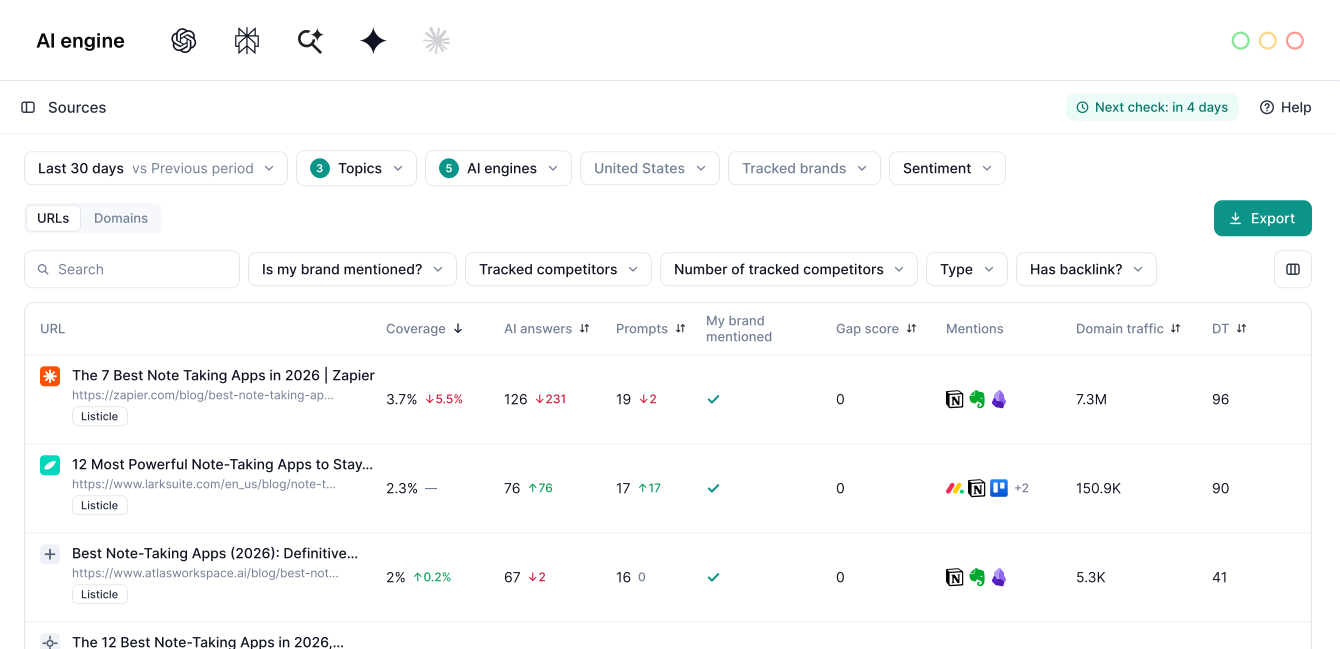
See the sources behind AI answers, then act on them
AI citation analysis traces each answer to the domains and pages behind it. This is evidence to act on.
See which sources shape what AI says about you
AI citation tracking shows the domains and pages AI cites, and how often. Invest where the answers come from: your own site, YouTube, platforms like G2, etc.
Turn source data into an outreach list
Filter pages that cite your competitors but not you, narrowed to the content types that drive citations. That’s a prioritized target list to build partnerships and create content.
Create content AI engines actually cite
See which content types get cited most (listicles, comparison pages, how-to guides) and build your content plan around them. You publish in the formats AI pulls from.
See which sources are already working against you
Start a free trial and pull your own gap-score list — the pages citing competitors but not you.
Know where to act to change what AI says about you
See what AI cites in your market at both domain and page level. Get the gap score, the filters, and the export to turn that data into a plan.
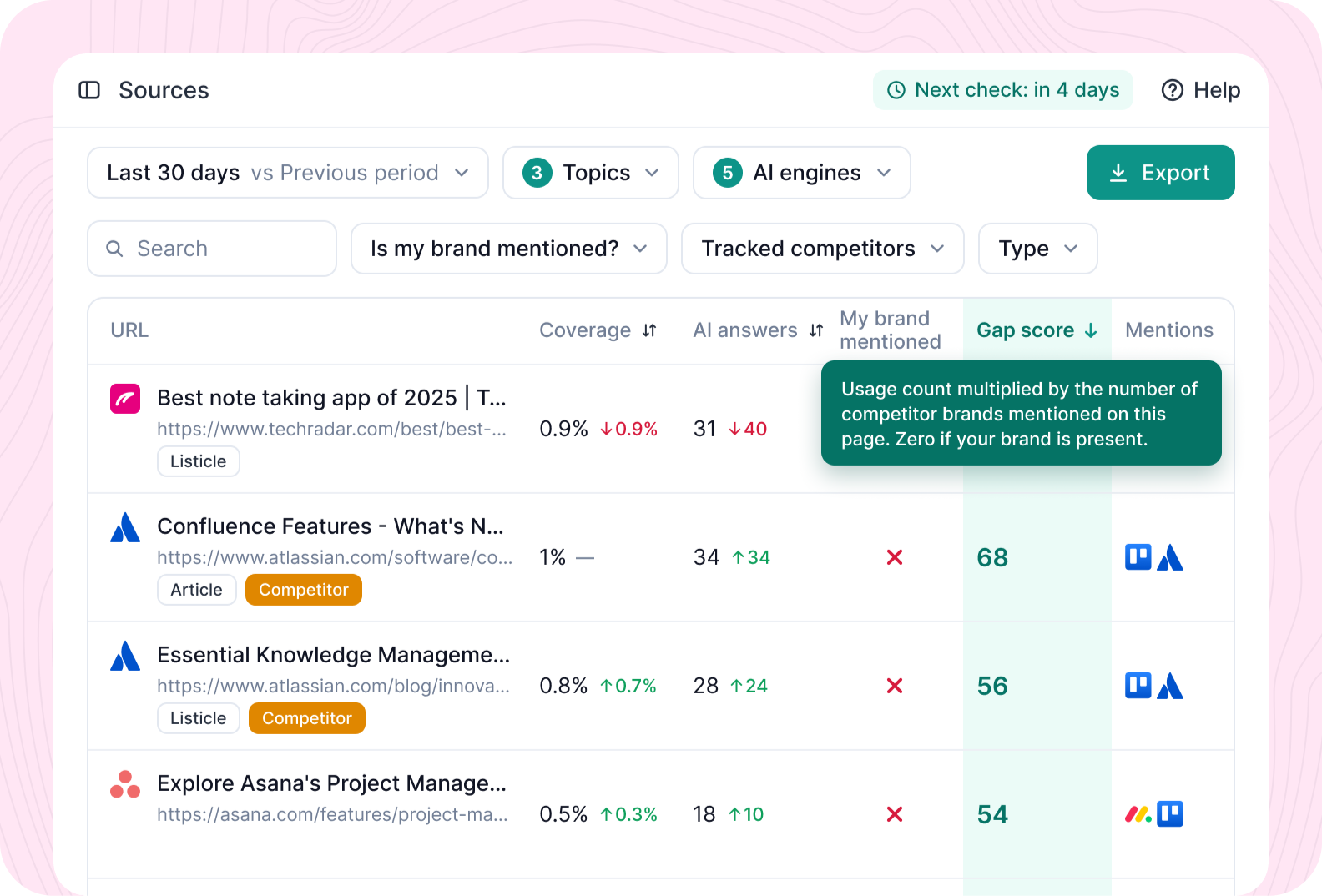
See where you’re losing to competitors
The gap score ranks the sources that cite the competitors you track but not you, so the pages naming the most of them, cited most often, rise to the top, allowing you to prioritize your further work and efforts to increase visibility. This is the gap many teams close first.
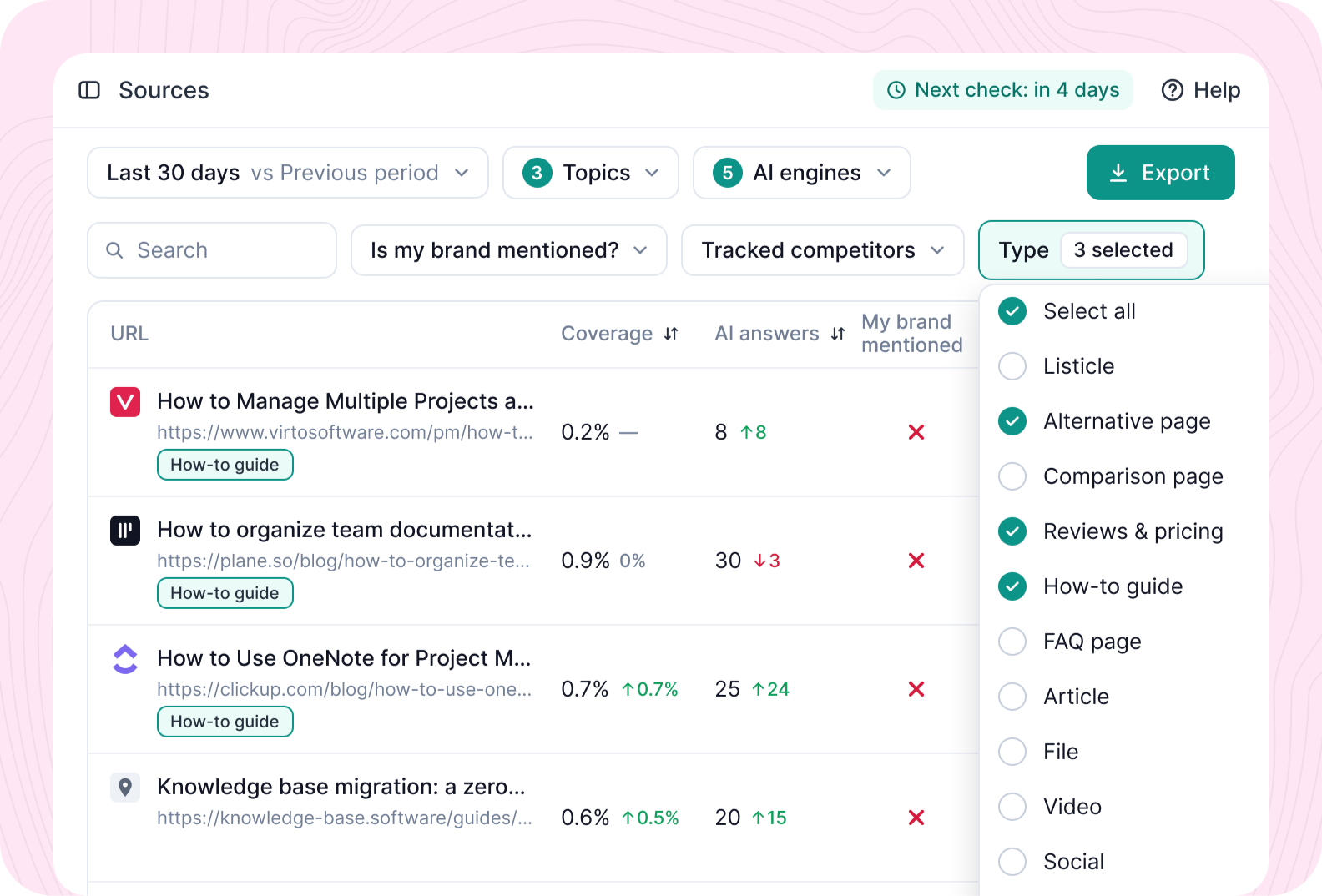
Filter sources by the content type that earns them
Break the cited sources down by page type: listicles, comparison pages, alternative pages, how-to guides, and more. You see which formats drive mentions in your market, so effort goes to the types that move answers rather than to domains at random.
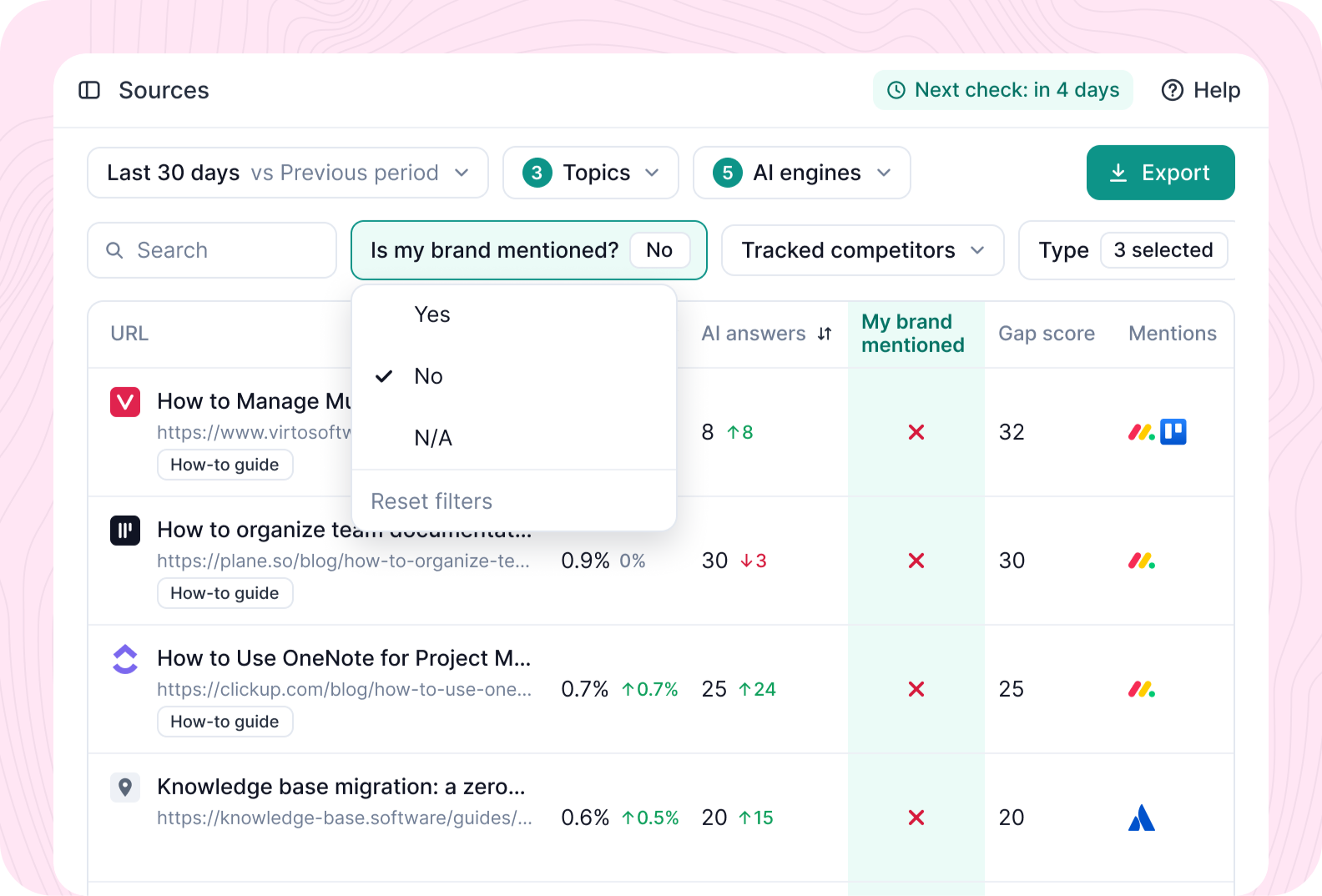
Find the sources you’re not on yet
The brand-mentioned filter is the broader view: set it to not mentioned and you get the sources where your brand is absent, whether or not a competitor is there. That’s your full visibility opportunity. Add the by-type filter to focus on the comparison pages, listicles or guides worth earning.
Powered by SE Ranking. Made for AI search visibility
SE Ranking covers the SEO side of visibility. SE Visible is built on that expertise for the AI side of it. Together, they give you the fuller picture of your brand’s presence across Google results and AI answers.

Why marketing teams choose SE Visible
SE Visible by SE Ranking: shared data foundation, consistent approach, one vendor to work with, not an experiment chasing the trend.


AI citation tracking that fits your needs
Choose the plan that fits your needs or explore SE Visible with a 10-day free trial
From
-
 200 prompts
 - ~30,000 AI answers analyzed/month
- 3 projects
- Answer engines tracked: ChatGPT, Gemini, AI Mode, Perplexity, AI Overview
From
- 450 prompts
- ~67,500 AI answers analyzed/month
- 5 projects
- Answer engines tracked: ChatGPT, Gemini, AI Mode, Perplexity, AI Overview
From
- 1000 prompts
- ~150,000 AI answers analyzed/month
- 10 projects
- Answer engines tracked: ChatGPT, Gemini, AI Mode, Perplexity, AI Overview
What is an AI citation?
An AI citation is a domain or URL that an AI engine references (linked or unlinked) when it answers a question about your market. SE Visible’s sources analysis tracks these across ChatGPT, Gemini, Perplexity, AI Overviews, AI Mode, and soon Claude, and shows how often each one is used.
What is citation share?
Citation share is how often a given source is cited in AI answers about your market, relative to all cited sources. A high citation share means that domain or page shapes a large portion of what AI says in your category.
What’s the difference between AI citations and AI sources?
In practice, they describe the same underlying thing from two angles: a “citation” is the event (an AI engine referencing a page in a specific answer), while a “source” is the domain or URL itself, viewed across all the citations it’s earned. Sources analysis rolls citations up into a list of sources so you can see which ones matter, not just count individual events.
Do you track domain-level or page-level citations, or both?
SE Visible covers both. The platform detects a specific comparison page or blog post and also rolls those up so you can also see which domains, overall, get cited most.
How do you get cited by AI answers?
There’s no guaranteed path, and any claim otherwise should be treated with skepticism. AI engines choose sources based on their own retrieval logic, which isn’t fully public. Earning citations usually means getting your brand onto the pages AI already cites and making your own pages easy for engines to retrieve and quote. Sources analysis gives you the starting list: the pages citing competitors but not you, and the content types that earn mentions in your market. From there, it’s outreach, content, and coverage work.
How often is source and citation data refreshed?
SE Visible refreshes tracking data daily, so shifts in which sources get cited show up as they happen rather than weeks later.
Stop guessing why AI answers favor someone else
See the domains and pages behind the answers in your market, find the citations competitors are earning and you’re not, and turn it into a plan.