


The best Peec AI alternatives in 2026: What we learned after testing 9 leading tools

Early in 2025, Peec AI gathered a lot of attention. It was one of the few solutions to the newly added challenge for SEOs: generative engine search. Agencies urgently needed to know the exact moment their websites were featured in AI Overviews, how their brands were represented in LLM responses, and the frequency of co-mentions with competitors. Peec.ai tracked Google AI Overview visibility, brand presence in AI-generated summaries, and prompt-level analytics for ChatGPT-style engines. We also found the platform very effective in AI Overviews visibility tracking, and supporting content teams in identifying content gaps—missing entities or weak topical coverage.
In 2026, the market will continue to transform. The teams from Reddit’s r/SEO, Slack communities like TrafficThinkTank, and enterprise SEO leaders on LinkedIn were reporting the same three issues that keep recurring:
- Cost was skyrocketing for large keyword sets.
- The correctness of results was changing across different industries.
- Teams required additional functionalities beyond that, such as multi-engine visibility, brand-narrative analysis, or more detailed historical snapshots.
As AI search was unfolding on Perplexity, ChatGPT-Search, Claude, and Bing Deep Search, marketers were seeking Peec AI competitors that were tracking as many sources as possible.
For this guide, we actually used the Peec AI competitors in real workflows, checked the claims by looking at the external reviews, and included the commentary of industry experts and technical SEO practitioners who are involved in AI-affected SERPs. Discover different scenarios in which a specific Peec AI alternative is useful so that you can decide whether or not to switch.
Comparison table of best Peec AI competitors
| Peec AI Alternatives | Specializes In | Best For | Starting Price |
|---|---|---|---|
| SE Visible | Strategic AI visibility tracking for marketing decisions, competitor benchmarking, sentiment analysis | CMOs, marketing leaders, agency and business owners, brand marketers | $189/mo |
| Writesonic | Generative Engine Optimization (GEO); AI visibility tracking across ChatGPT, Google AI Mode, Gemini, Perplexity, Claude; actionable optimization workflows | Enterprises and marketing agencies; brands focused on improving AI search visibility and citations | $199/mo |
| Profound AI | Precise AI Overview tracking; entity extraction; attribution mapping | AIO visibility teams; entity-driven SEO; competitor presence monitoring | $99/mo |
| Surfer AI Tracker | AIO monitoring integrated into content audits and keyword research | Teams using Surfer; large content ops; SERP-informed editorial workflows | $95/mo |
| AthenaHQ | Multi-engine AI Visibility (Google AIO, Perplexity, ChatGPT, Claude) | Brands competing in AI-native search; multi-engine analysts; CI teams | $295/mo |
| Scrunch AI | Brand narrative and descriptor analysis across AI systems | Brand managers, PR teams, CMOs; companies tracking AI messaging | $300/mo |
| GetCito | High-speed, keyword-level AIO detection; volatility tracking | SEO teams with large keyword sets; agencies; volatile YMYL verticals | $299/mo |
| Nightwatch | Combined classic rank tracking + AI Overview detection | SEO agencies; teams needing SEO + AIO in one dashboard; local SEO | $32/mo |
| Keyword.com | Enterprise-grade SERP tracking with AIO triggers & competitor inclusion | Enterprises; agency reporting; teams shifting to AI Visibility | $24.50/mo |
9 best Peec AI alternatives: What to consider?
1. SE Visible
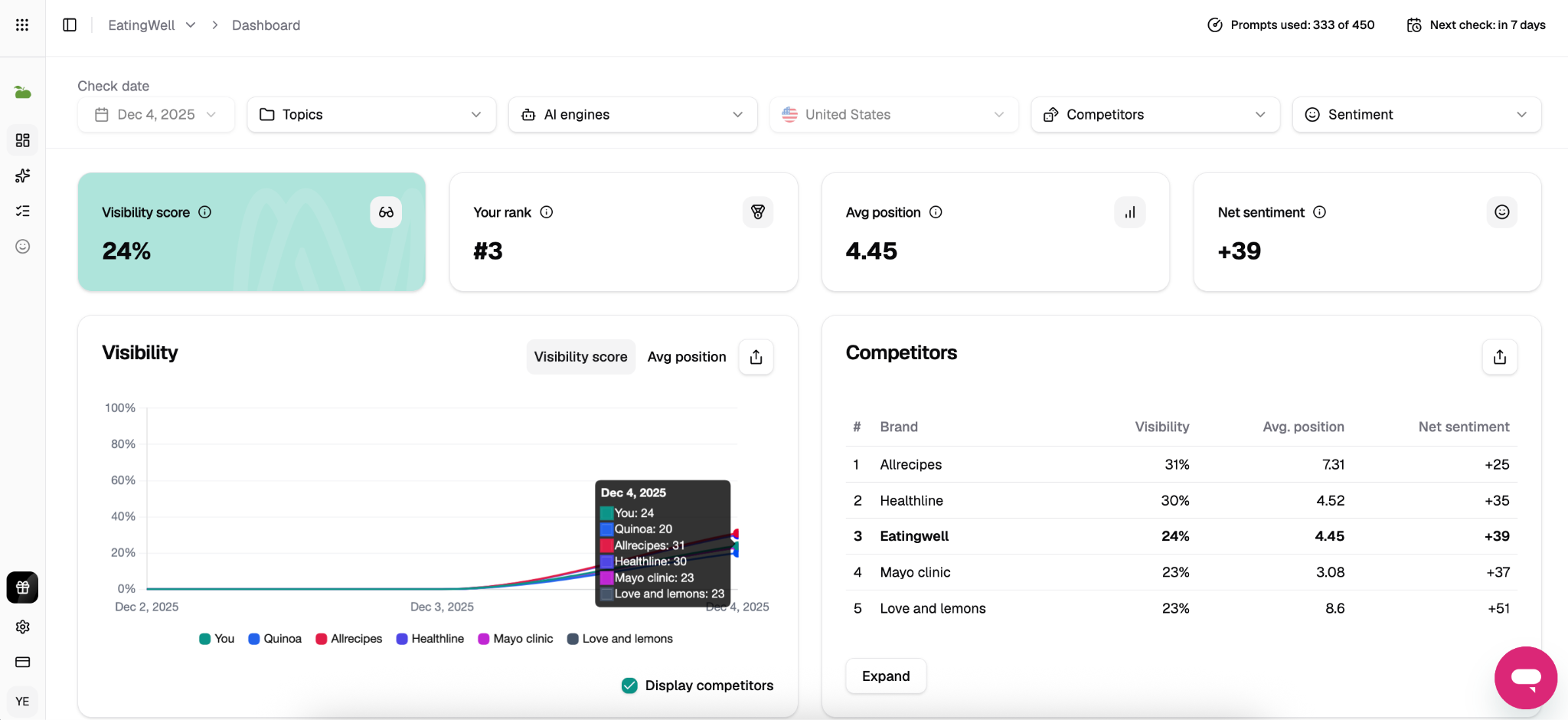
SE Visible is a strong alternative to Peec AI that gives you complete AI visibility tracking without the add-on trap. It shows how your brand appears across ChatGPT, AI Mode, Perplexity, and Gemini, all included from day one, no extra spending.
Built by the team behind SE Ranking, SE Visible applies that same data quality to AI visibility tracking.
You see your brand’s visibility share, sentiment score, competitor rankings, and source analysis in one clean dashboard that updates weekly. All the data is visualized, and users appreciate this. For example, Madhav Mistry, AI Search Content Strategist, noted: “SE Visible already feels like a marketer’s AI visibility command center. I really like the clarity of data.”
The platform is also easy to navigate and you can onboard your entire team at no extra cost, regardless of plan size.
Standout features
- Helicopter view of your brand’s AI visibility: See where and how your brand is presented across major AI systems
- Competitor benchmarking: Compare your visibility share, average position, and sentiment against competing brands
- Sentiment analysis: Monitor brand perception with a Net Sentiment Score (–100 to +100)
- Prompt management: Use topic-grouped suggested prompts or add custom ones to focus on relevant queries
- Source insights: Identify which domains and URLs AI engines cite most often when mentioning your brand
For teams that need a more tactical approach, SE Ranking’s AI Search optimization features let you take action to improve your AI search presence with more practical data, tools, and insights.
Best for
- CMOs, agency owners, marketing leads
- PR teams and brand managers who need strategic clarity on how their brand appears in AI search and want a scalable, noise-free platform to guide decisions.
Pros
- Track ChatGPT, AI Mode, Perplexity, and Gemini without paying for add-ons
- Accurate, reliable AI visibility data
- Clear dashboards and easy adoption
- Transparent, scalable pricing
- Built-in sentiment tracking and competitor analysis
- Weekly updates and historical data for strategic decisions
Cons
- CSV export only in the initial version (more sharing options coming)
- Focused on visibility tracking (actionable SEO requires SE Ranking)
Pricing
SE Visible has three plans:
- Core: $189/mo for 450 prompts and 5 brands.
- Plus: $355/mo for 1000 prompts and 10 brands.
- Max: $519/mo for 1500 prompts and 15 brands.
All plans include unlimited users.
A 10-day free trial is available.
2. Writesonic
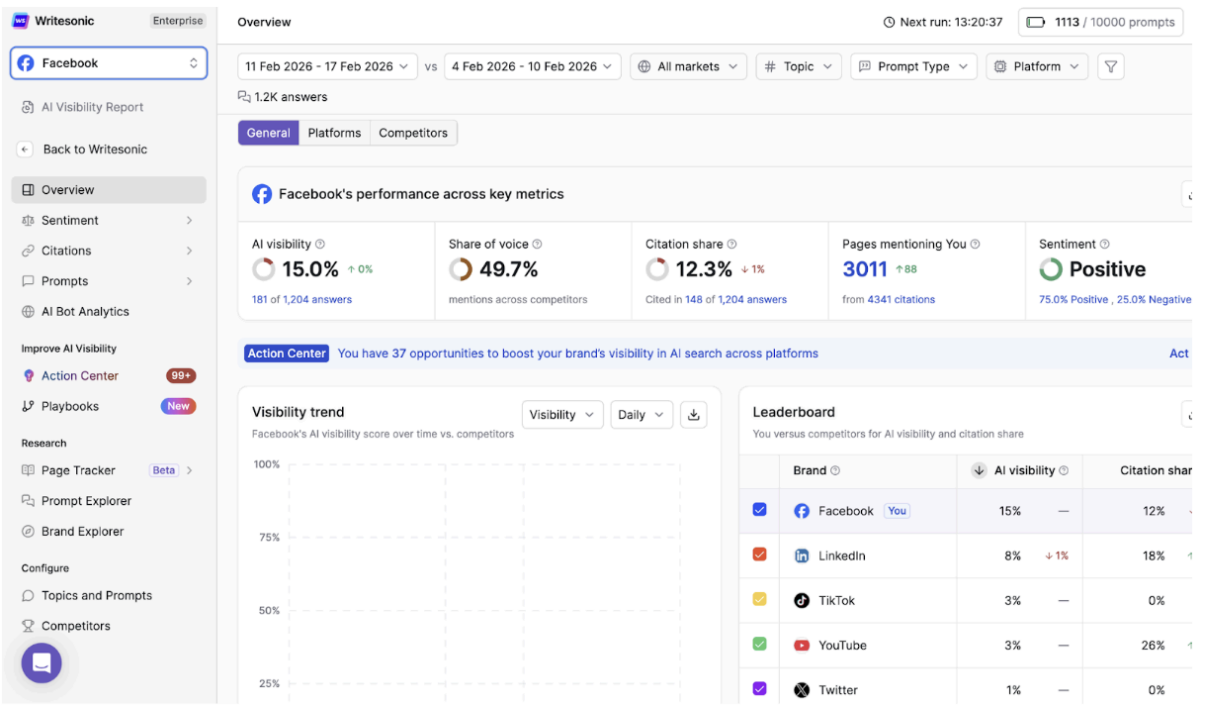
Writesonic is built for brands that want to go beyond monitoring AI search and actively improve visibility across generative engines.
What truly differentiates Writesonic is its Action Centre. Beyond just showing which prompts trigger citations, it highlights where your pages are not being cited, how many answers you’ve missed, and where competitors are outperforming you. It pinpoints visibility gaps, flags technical or content issues, and provides clear, step-by-step recommendations on what to create, update, or optimize turning missed opportunities into actionable wins.
A g2 review (5/5) shares: “Most GEO tools just focused on tracking and basic fixes. Writesonic actually showed me how to improve AI visibility. The Action Center highlights what content to create, where to reach out, and even flags technical issues. GEO feels much easier now, and I’ve seen an increase in brand mentions in ChatGPT.”
Some users note that the setup can initially feel complex due to the depth of features, especially for teams new to GEO.
Standout features
- Action Centre with guided workflows to improve citations
- Prompt-level analytics showing which queries trigger mentions
- Citation and source tracking across generative engines
- Competitor benchmarking and share-of-voice analysis
- Coverage across ChatGPT, Gemini, Claude, Perplexity, and Google AI Mode
Best for
- Medium to large enterprise
- Marketing Agencies
Pros
- Clear step-by-step workflows to improve citations
- Tracks prompts, pages, and sources in one dashboard
- Strong competitor benchmarking
- Unified cross-engine coverage
Cons
- May feel overwhelming for smaller teams
- Advanced workflows limited to higher-tier plans
- Less focused on traditional SEO like backlink tracking
Pricing
Professional Plan: $199/month (annual) or $249/month monthly
Advanced Plan: $399/month (annual) or $499/month monthly
Custom Enterprise pricing available
3. Profound AI
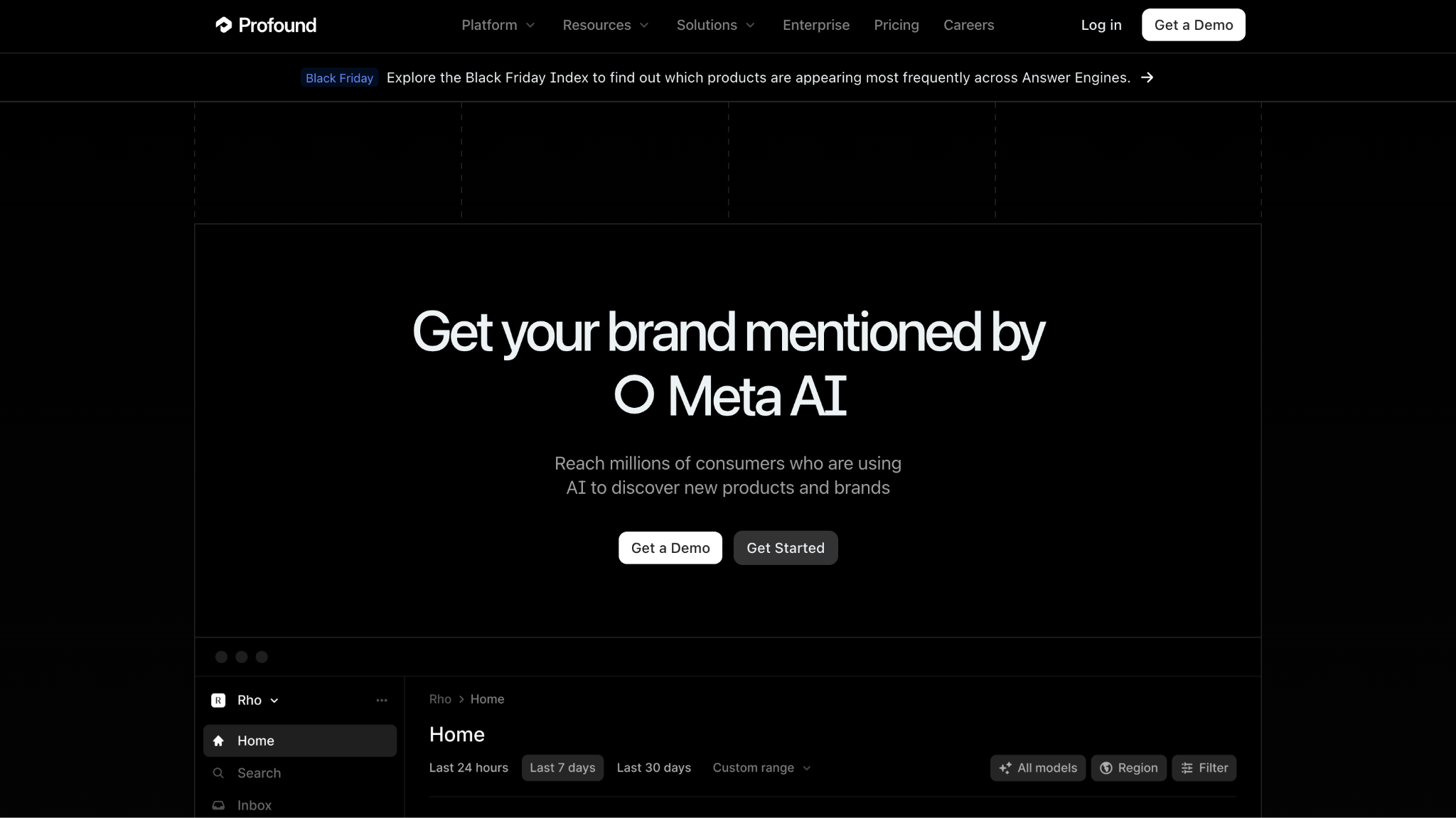
Profound AI is all about that brand watch inside Google’s AI Overviews. Compared to other Profound alternatives, it is very accurate in pinpointing how exactly a site is mentioned in the generated summaries.
Ron M., Global Director of Digital Marketing, says he really appreciates “how Profound allows us to track AI Visibility and visibility scores efficiently, which is crucial for understanding our brand’s impact. The ability to monitor daily activities and assess whether our brand is gaining more or less visibility across various keywords and prompts, and LLMs is invaluable. I love Profound’s content engine; it empowers me to create content rapidly, often in under ten minutes, with full creative control. This feature enables me to draft, make revisions, add brand guidelines, and easily share completed content with my marketing team.”
Anna S., an Enterprise Content Marketing Manager, shares that the biggest challenge of Profound is that there’s almost too much good data. “We can slice and dice the info to see what’s working for different business goals (like top of funnel vs acquisition), and we can even see how we stack up against our key competitors.”
Ksenia Demchenko, ex-MacPaw SEO Team Lead, noted in Brand SEO Hub that she chooses Profound since it provides way more citation sources compared to other tools, and is now the most balanced solution in terms of price/value.
Standout features
- Tracking of AI Overview inclusion and attributions
- Detection of changes for AI answer formats
- Comparison of AI-generated summaries based on a snapshot
- Mapping of entity relationships
Best for
- Teams focusing on AI Overview visibility
- Entity-driven SEO operations
- Programs monitoring competitor presence inside AI answers
Pros
- Clear snapshots of AI answers
- Strong entity extraction
- Reliable historical comparison
Cons
- Minimal traditional rank tracking
- The interface might be a little challenging for new users
Pricing
The price for a subscription is onwards from $99 per month (Starter plan, 50 prompt slots, ChatGPT tracking).
4. Surfer AI Tracker
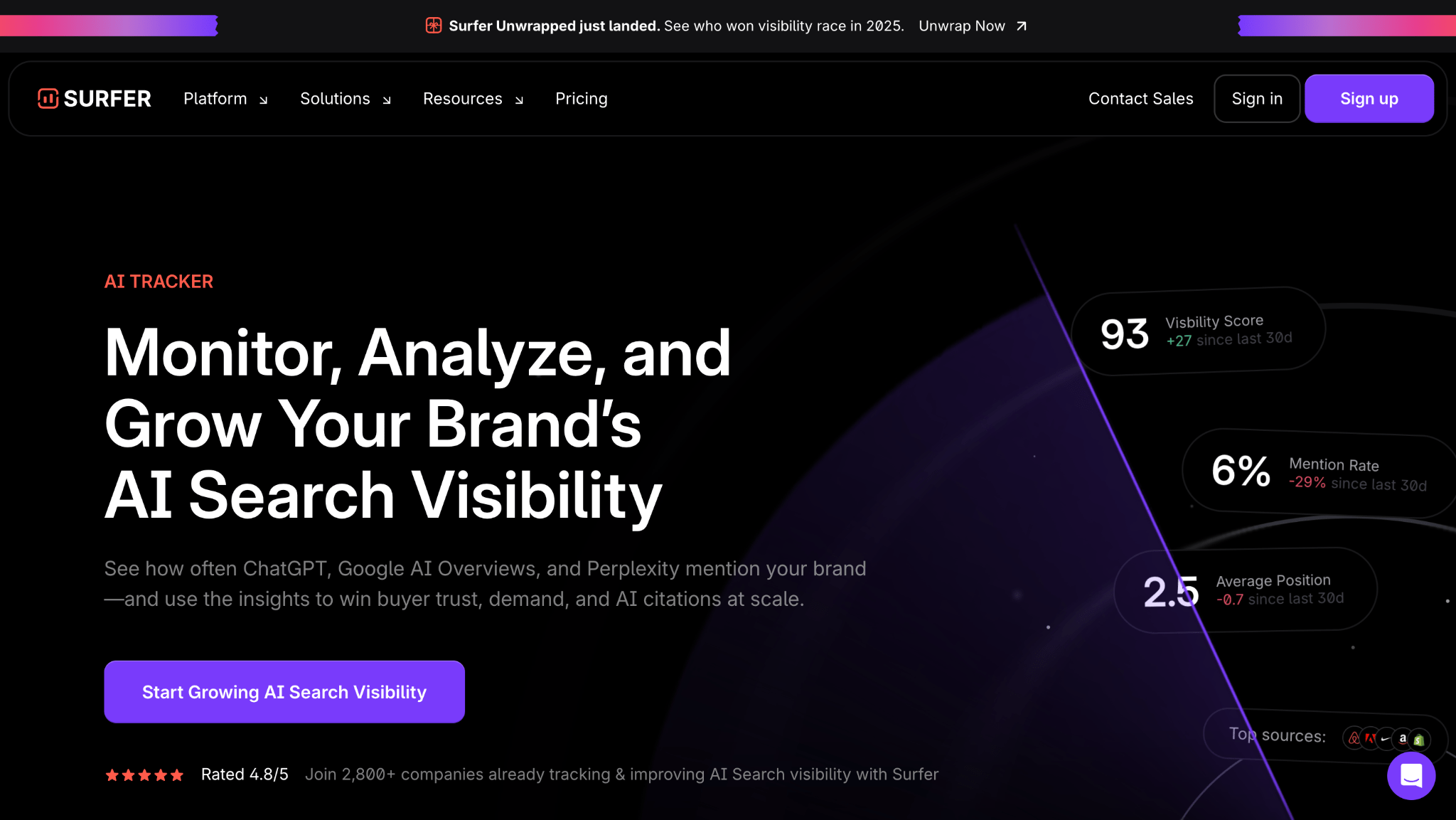
Surfer’s AI Tracker is a community’s long-awaited module of the popular SurferSEO tool. Its core is content audits, which most agencies already use Surfer for, and AI Visibility is becoming just another part of the already-existing workflow with this tool. Independent reviewers of TheRankMasters describe it as “a huge advantage for growth-stage SaaS—you don’t have to stitch together insights from different tools. Surfer centralizes visibility so you can monitor whether your brand is consistently cited across the platforms your ICP uses at different stages of discovery.”
We tested this Peec AI competitor, and here’s a summary: Surfer would provide great support for editorial teams that are using Surfer’s scoring system. They provide the rationale for the possible influence of content decisions on AI answers.
Standout features
- AI Overview monitoring linked to Surfer content audits
- Visibility scoring tied to keyword difficulty
- SERP volatility indicators for AI-driven queries
Best for
- Teams that already use other Surfer packages
- Content operations optimizing at scale
- Writers prioritizing SERP-informed content briefs
Pros
- Strong workflow integration
- Contextualized AI Visibility insights
- Easy onboarding for Surfer users
Cons
- Not ideal for teams not using Surfer’s main platform
- Limited competitive intelligence depth
Pricing
The AI Tracker add-on starts at $95/month for 25 monitored prompts. Larger bundles (100, 300 prompts) are available at a lower per-prompt cost.
5. AthenaHQ
AthenaHQ is an AI search visibility hub that not only tracks Google AI Overviews but also AI-generated results in Perplexity, Claude, and ChatGPT. On G2, people often refer to Athena when talking about “multi-engine visibility,” especially after Perplexity changed its sourcing method more aggressively in late 2025.
Athena is remarkable in the correction of missing citations. It indicates when your competition is picked in AI answers from Perplexity or ChatGPT Search, whereas your brand is not.
Standout features
- Cross-engine AI Visibility tracking
- Source citation mapping
- Brand presence scoring
Best for
- Brands competing heavily in AI-native search engines
- Teams needing multi-engine snapshots
- Competitive intelligence researchers
Pros
- Wide range of AI search engines covered
- Neat competitor attribution visuals
- Useful citation-gap turning points
Cons
- The product is growing and still undergoing changes
- Reports exports can be better
Pricing
Plans for individual users start at approximately $295/month. (AthenaHQ offers a 10-day trial only for its paid plans. Also, at the moment of writing, it offers a discounted price for the first month—$95.)
6. Scrunch AI
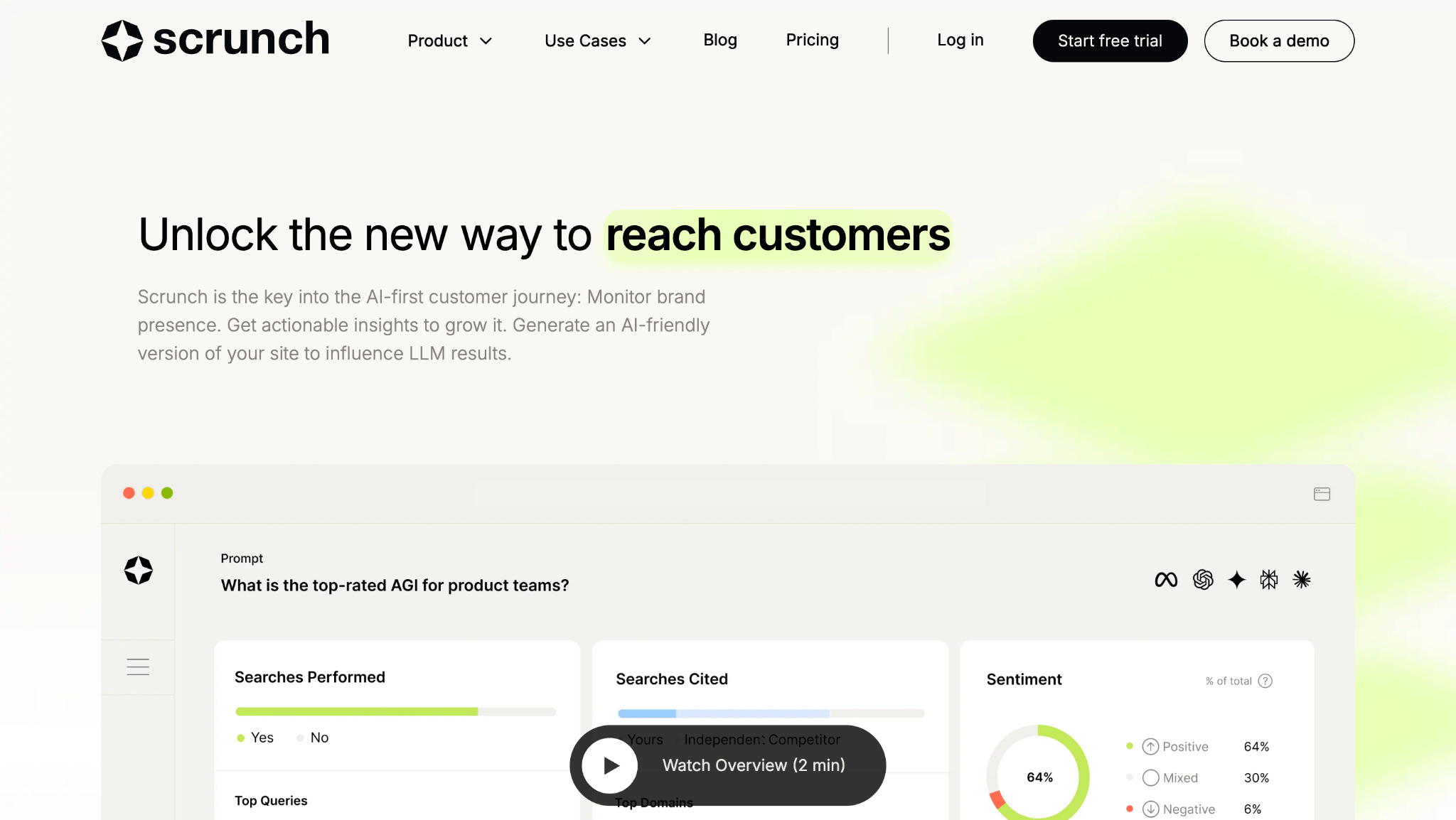
Scrunch is a brand intelligence tool that focuses on how a brand is mentioned, summarized, or positioned in AI answers. On r/seogrowth, a Reddit user says he chooses Scrunch: “I tried the Otterly plugin for SEMRush, it was useless. Scrunch isn’t cheap, but I see this as a tool I’m only going to use more. It has competitor tracking, prompt upload, and a Looker Studio for referral visits from AI sources.”
When we tested Scrunch, identifying different brand descriptions for various engines worked particularly well, though the tool exports a smaller number of citation sources than Profound.
Standout features
- Brand narrative monitoring across AI systems
- Competitor language comparison
- Sentiment and descriptor analysis
Best for
- Brand managers and CMOs
- PR teams monitoring AI-generated messaging
- Companies managing multiple product lines
Pros
- Great for narrative comparison
- Useful for PR teams
- Strong descriptor consistency insights
Cons
- Not a keyword visibility tracker
- Less useful for technical SEO
Pricing
The starter plan costs $300 per month (350 custom prompts, 1,000 industry prompts; annual billing is also available).
7. GetCito
GetCito (AI Monitor) is a tool that emphasizes keyword-level AI Overview monitoring. Many SEOs on G2 highly commend its speed of onboarding and clean UI. In contrast to brand-oriented tools, Cito is a performance SEO team tool that is used to track hundreds or thousands of keywords, which is the right way to achieve fast growth.
We did a volatile YMYL keywords test with Cito. This top Peec AI competitor can quickly detect when AI Overviews disappear or extend into a longer multi-step instruction format.
Standout features
- Keyword-based AI Overview detection
- SERP volatility signals
- Competitor summary comparison
Best for
- SEO teams managing large keyword sets
- Agencies needing fast alerts
- Sites in volatile verticals
Pros
- Real-time tracking
- Clean interface
- Fast alerts
Cons
- Limited brand-level insights
- No multi-engine tracking
Pricing
AI Overview tracking is starting with GetCito Starter—$299/Month (10 prompts, a dedicated GEO strategist, monthly reports, etc).
8. Nightwatch
Nightwatch is well-known for its detailed rank monitoring. Its NightOwl AI SEO Agent module takes this a step further by combining AI Overview visibility with regular SERPs. We found Nightwatch’s consolidated reporting very appealing, as the top Peec AI alternatives have. It allows teams to see the AI effect alongside traditional ranking changes.
Standout features
- AI Overview detection
- Traditional rank tracking integration
- Localized visibility tracking
Best for
- Agencies supporting many clients
- Teams wanting SEO + AI tracking in one place
- Brands sensitive to local SERPs
Pros
- High accuracy
- Integrated dashboards
- Great local tracking
Cons
- Not as strong in AI narrative tracking
- Fewer competitor comparisons than in Peec or Profound
Pricing
AI tracking features come with Nightwatch Standard. The entry plan is about $32/month when billed annually or $39 if billed month-to-month (250 daily keywords). The price increases with the number of tracked keywords.
9. Keyword.com
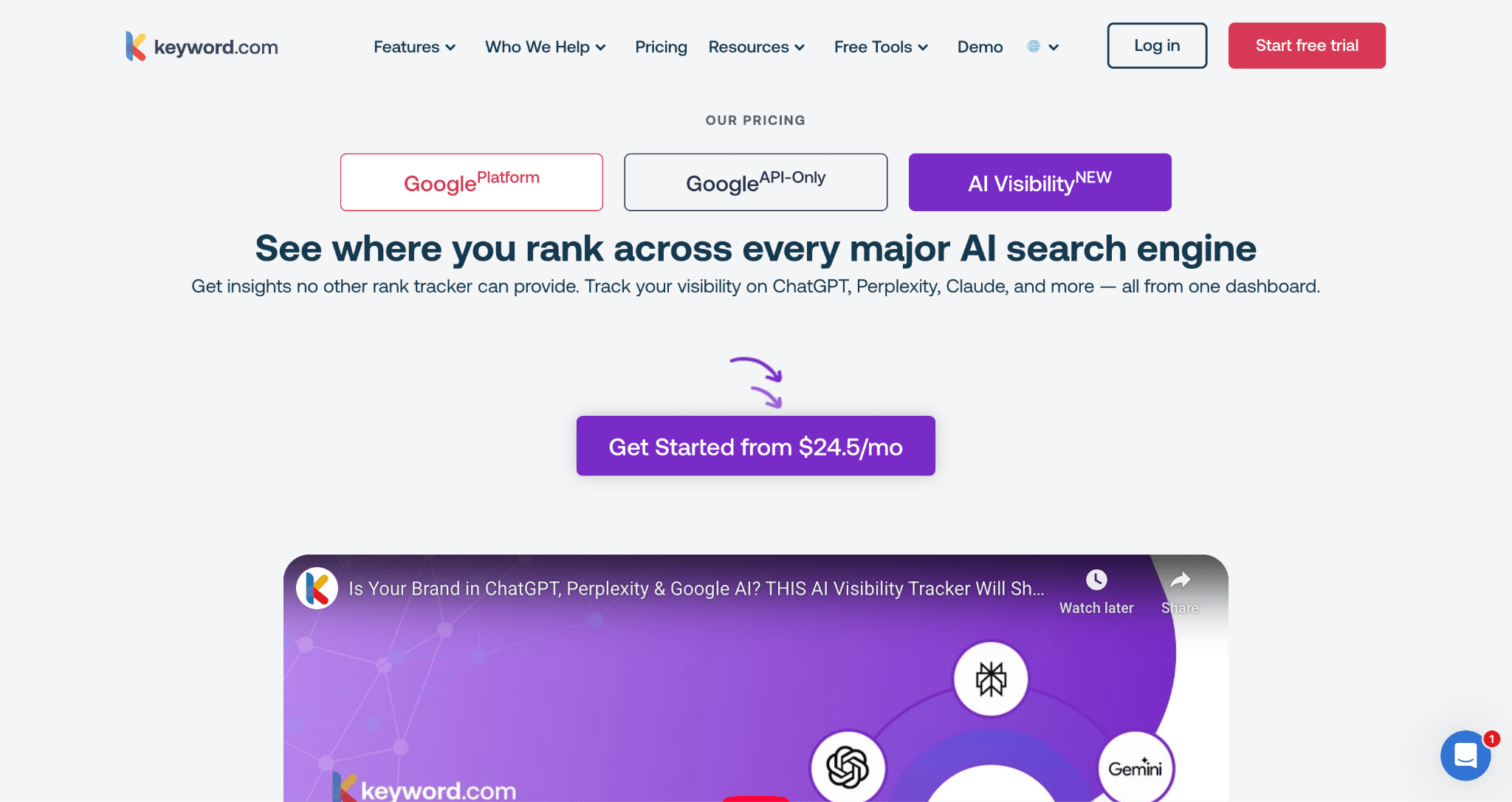
Keyword.com is mainly referred to as a rank tracker trusted by and friendly to enterprises. Its recent AI Search Visibility component primarily concentrates on recognizing the keywords that trigger AI Overviews and how competitors are featured in those summaries. While testing, we found that its clean reporting is really standout—mostly because it reflects the exact changes from one day to the next in the frequency of AI Overview appearances.
Standout features
- AI Overview triggers
- Competitor inclusion reports
- Daily change tracking
Best for
- Enterprises in need of stable reporting
- Agencies creating client-ready dashboards
- Teams transitioning from traditional SEO to AI Visibility
Pros
- Reliable rank tracking precision
- Neat reporting
- Good support
Cons
- The AI narrative feature is limited
- The platform doesn’t support multi-engine visibility
Pricing
This one is another representative of cheaper alternatives to Peec AI. AI Visibility tracking price starts at $24.50 a month for 50 credits and grows with your credit usage. There are also some offerings for larger credit bundles and annual discounts.
How do AI visibility tools work in 2026?
AI visibility tools keep track of the brand image reflected in AI replies. This comprises AI Overviews by Google, direct citations in ChatGPT Search, and answer references in various other engines like Perplexity or Claude. Each tool applies a different method, from snapshots and scraping to real-time triggers, to capture the moment an AI model acknowledges a site as a source, details how the answer is presented, and which competitors are mentioned.
What does “AI visibility” actually measure?
AI Visibility is a measure of how frequently an AI system points to a particular brand when it generates an answer to a user’s question. It’s less of a position game and more of a qualitative one in terms of inclusion, placement, and attribution. The platforms—even if they are cheaper alternatives to Peec AI—that lead the pack visualize the brand image clearly and provide structured data rather than simple screenshots.
What is the difference between AI Overview visibility, ChatGPT visibility, and LLM answer presence?
| Metric | What it measures | Why it matters |
|---|---|---|
| AI Overview visibility | Inclusion in Google AIO snapshots. | Direct influence on search traffic shifts. |
| ChatGPT visibility | Whether ChatGPT-Search references your content in conversational results. | Important for “ask-first” search behavior. |
| LLM answer presence | Mentions or citations inside generative answers across various engines. | Shows brand credibility in multi-engine ecosystems. |
How do SERP results and AI Overviews overlap?
There’s only partial overlap. Usually, Google takes the information that underlies a given AI Overview from the sites that are already ranking. An entity thus has a prominent influence on this. In practice, a large number of brands could be positioned in the top 5 while not being recognized at all in AI Overviews because their content was missing structured data, lacked people/org schema, or had weak topical clusters.
Why must brands track AI visibility in 2026?
AI Overviews grab the most valuable spot on the SERP page. Several studies conducted by BrightEdge, Gartner, and enterprise SEO teams have demonstrated that the number of queries leading to AI Overviews is steadily increasing across various industries. Brands can no longer rely on guessing whether they are included in generative answers or not. By monitoring AI Visibility, teams get an early warning of the traffic changes and also see where the competitors are winning the most in AI summaries.
What happens after Peec AI in 2026 and beyond?
The monitoring of AI Visibility through different tools in 2026 is a shift from seeing static snapshots to real-time monitoring. Prompt detection of AIO changes on a minute-by-minute basis is what implementations of such monitoring expect increasingly as Google tends to update its answers more frequently during spikes in search behavior. Those Peec AI competitors that will allow near-real-time capturing of AIO volatility give a clearer advantage to competitive niches such as finance, healthcare, SaaS, and local services in which timely information relating to the AIO is crucial.
Another significant trend is the emergence of AI brand visibility as an entirely new metric. Professionals from leading companies foresee that generative search systems will be highly dependent on entities, brand trust, and citation consistency. Leading the market, alternatives to Peec AI are already setting up metrics that measure how much a brand is present in the summations that the model generates.
Lastly, the sector is moving away from SEO (Search Engine Optimization) towards AEO (AI Engine Optimization). While SEO is about ranking positions, AEO is concerned with how AI understands a brand’s identity, authority, and the topical footprint. The majority of agencies are currently working hard to keep their structured data complete, ensuring semantic content is comprehensive, and brand descriptions remain consistent across the Internet. Peec AI alternatives that help to visualize these components will determine how the teams will function not only in 2027 but long after.
Conclusion
After evaluating eight major Peec AI alternatives, we can say with confidence: There is no single platform that dominates each and every category. Profound is the platform that provides the most robust entity-centered AI Overview tracking. AthenaHQ is the leader in multi-engine visibility. Scrunch is the leading tool for brand narrative analysis. Keyword.com and Nightwatch are good hybrid models that merge traditional SEO with AI Visibility and thus complement each other perfectly. Surfer and SE Visible are two big platforms that facilitate AI reporting while nested in established content and ranking ecosystems. GetCito is a player that excels in large keyword sets and fast alerts.
The most important point to remember is that teams should select the top Peec AI alternative based on their working style rather than what sounds most technologically advanced. Entities-optimizing brands find Profound the best Peec AI alternative. Those who have multi-engine visibility will benefit from AthenaHQ the most. Content-heavy organizations will integrate seamlessly with Surfer or SE Visible.
Peec AI can still be a good tool if you need a quick lookup, but a team that requires a wider AI Visibility view will usually end up with more than one tool. The environment is changing fast, and the decision of the best platform in 2026 will depend on how clear the use case is, how much data is expected, and how far a brand is willing to go in optimizing for AI engines other than Google.
FAQ
Is there an alternative free version to Peec AI?
The majority of Peec AI competitors do not provide fully-featured free plans because snapshot collection is a resource-heavy process. Some platforms may offer trial access or a limited number of free credits, but as of 2026, there is no alternative to Peec AI that provides the same features for free.
In 2026, what would be the best alternative to Peec AI?
It is dependent on the objective. For structured AI Overview tracking, Profound is the most accurate. For multi-engine visibility, the first choice would be AthenaHQ. For unified rank and AI Visibility reporting, SE Visible + SE Ranking are the best performers.
Which tool is best for monitoring AI Overview visibility?
Profound, SE Visible, and AthenaHQ are the best Peec AI alternatives in AIO detection most of the time; Surfer and GetCito can also be strong for teams that track keyword-level visibility.
What features does Peec AI lack?
Users often admit Peec has some feature gaps to fill to keep up with the top Peec AI competitors. They include incomplete multi-engine tracking, advanced competitor mapping, narrating sentiment analysis, and real-time AIO volatility detection.
Is Peec AI still good to use in 2026?
If the priority is to have Google-only AI Overview snapshots and simple inclusion tracking, then the answer is yes. But a brand that is competing in AI ecosystems beyond Google will most likely have to combine the tool with Peec AI alternatives or move to a platform that offers broader coverage.